

Why a developer can't fix your website's usability, market positioning or SEO problems
A website developer can build almost anything you describe to them clearly.
What a developer usually can’t do (and generally isn’t being paid to do, is tell you when a clear, specific instruction is actually the wrong thing to do or something that will give your website an outcome that is worse for your business or brand.
That gap is exactly where this story sits and it’s worth understanding before you hand a technical fix to whoever’s cheapest or most available to build it. This is another example of a business owner ‘trusting’ their existing support staff instead of someone with expertise, read about the example with ‘A Healthy View’ where they failed to execute the advise I provided in my audit.
A real, detailed diagnosis
I audited a large, established Australian lifestyle publisher, more than a decade online, fashion, beauty, finance, health and relationship content, with a genuinely significant history behind it: over 2.9 million users and 11.6 million pageviews across its lifetime.
Traffic had been declining steadily since 2018, sharply since late 2019 and the business wanted to know exactly why
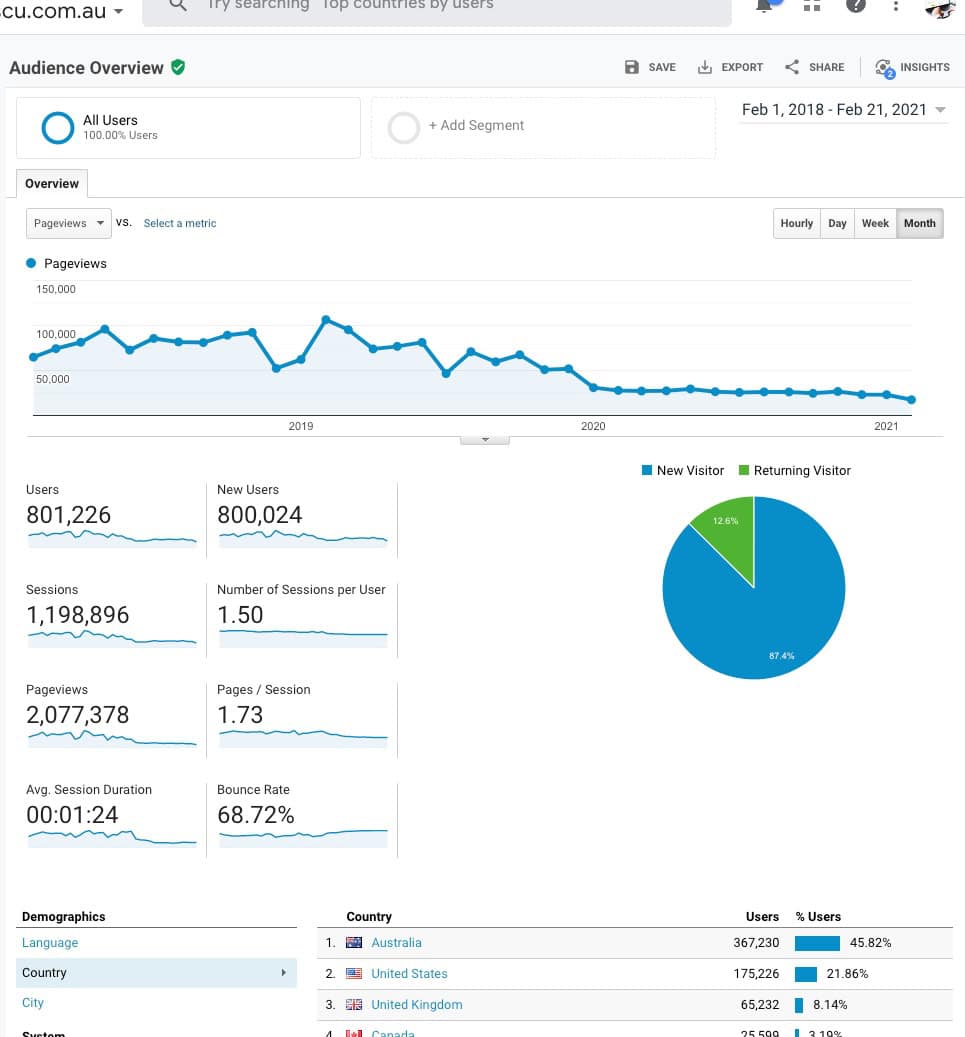
The audit found real, specific, fixable problems:
- No Google Business Profile at all for a ten-year, multi-million-user brand, meaning it hadn’t even claimed its own name locally.
- Hundreds of recipe pages earning almost no search traffic, traceable directly to missing the word “recipe” in titles and URLs and no structured data marking them as recipes at all.
- A “news” section that had earned exactly one click in sixteen months, because a news sitemap had never been submitted to Google.
- Thousands of pages missing basic headings, meta descriptions or alt text.
- A mobile PageSpeed score around 30 out of 100, on a site where 70% of visitors were on mobile.
- Links scattered across the site pointing to an old development address instead of the live one.
- Over 13,000 URLs quietly redirecting through an insecure, non-HTTPS version of themselves first.
Every one of these had a specific, correctable fix, and I handed over a prioritised, twenty-point action plan explaining exactly what to do and why including 10 detailed worksheets and data sets to step through together with screenshots from Google Search Console or Google Analytics for proof.


What happened next

Rather than have that plan implemented directly, the business engaged their own developer to build a redesigned site around it.
A newly designed website with a new look and feel went live.
Then the real, measured data came in and it told an uncomfortable story:
- PageSpeed performance was worse on the new site than the old one.
- Search Console reported more errors after the rebuild, not fewer.
- Bounce rate, comparing the same month year on year, was worse by 25 to 28%.
- Time on site and pages viewed both declined.
- A single day in November even produced a spike of over 2,000 visitors from unidentified US addresses spending under ten seconds each, almost certainly bot traffic riding in on a bad backlink, muddying the picture further.
- Organic search traffic did grow, but the people it brought in engaged with the site less than before, not more.
Real money and real effort went into this. The outcome, independently measured, was worse than doing nothing at all and probably the worst part of all was the owner did it so the site could ‘look nicer’ with a developer that didn’t alert her to any of this.


Why this actually happened
Here’s the part really worth considering.
The developer almost certainly did exactly what was asked but that is the whole problem.
An audit like this isn’t just a checklist of individual fixes, it’s a set of decisions that interact with each other:
- Change a URL structure and you need redirects handled correctly.
- Rebuild page templates and you need to check heading hierarchy and metadata survived the move.
- Refresh a design and you need to confirm nothing that was quietly working got stripped out along the way.
A developer skilled at building what’s described to them isn’t automatically equipped to catch problems in what’s being described, and often isn’t being paid to look for them either.
If the business owner instructing the work doesn’t have that specific expertise and the person executing it doesn’t have it in the way that’s actually needed, you end up with two people, neither one positioned to catch what the other missed. That’s not a developer being bad at their job, it’s a genuine gap between what a business owner asked for and what the business owner actually needed.
I see this happen a lot because contractors will typically do what is requested of them rather than question or evaluate whether every item will be beneficial or not, their job is to get the invoice done and paid.
In this example the business owner wanted the refreshed website created to help grow traffic, create a more viable platform to sell advertising partnerships & grow her brand.
What did the client say?
“It was great to work with Paul on reviewing our SEO ahead of site update and rebranding. His reporting was thorough and clear, his recommendations insightful”
Bahar
What to actually check before you hand this kind of work to anyone
- Ask specifically about experience with search performance through a redesign, not just whether they can build what you’re describing. Building a site and preserving its search visibility while doing so are genuinely different skills.
- Ask for real before-and-after examples of a similar project, not just a portfolio of finished sites.
- Get an independent technical review once work is complete, before you assume it’s done, the same way a redesign that looks better can still quietly cost a business its rankings if nobody checks what actually happened underneath the new design.
- If you’re the one giving instructions and you’re not confident you’d catch a mistake in the result, that’s worth admitting upfront rather than after the metrics come in worse than before. Or having someone like a marketing consultant oversee the steps being taken to ensure what goes live will function as expected.
None of this means doing everything yourself, or never using a developer for exactly what developers are good at. It means being honest about where the real expertise gap sits before work starts, not after a redesign quietly undoes years of earned visibility.
What happened to the old site

Curiosity got the better of me, so I went looking for what Rescu looks like today. I couldn’t find it.
My first assumption was that it had shut down, which wouldn’t have surprised me. Then I spotted the URL mentioned in a Facebook post, followed it through to the profile, found recent activity, and the link in that profile led to an entirely different brand: agelessradianceclub.com.
According to SEMrush the original site seems to have lost all its traffic some time in 2023. The new brand seems to have launched in November 2024 and is currently pulling in roughly 3,000 to 4,000 organic visits a month.
Oddly, though, the page pitching potential advertising partners still references Rescu by name, a confusing leftover for a brand that’s supposedly moved on entirely. The positioning itself has shifted hard toward beauty, cellular wellness and longevity, built around a podcast, YouTube channel, Instagram, newsletter, a virtual clinic and live events, pitched as VIP, insider access to leading experts and the latest science in the space.
Here’s the part that gave me cause to pause and scratch my head.
The site’s actual top-ranking keyword, per SEMrush, has nothing to do with any of that. It’s a story about Kevin Rudd launching a tea brand, followed closely by one about Australian actress Brooke Satchwell’s engagement.
Neither has any obvious connection to beauty, wellness or longevity. It’s hard to say for certain without digging further, but it has the feel of the same underlying problem from years earlier, showing up again under a new name: real traffic arriving through content that has nothing to do with what the brand is actually trying to be known for.
If you’re planning a redesign, or already suspect a recent one didn’t do what it was supposed to, get in touch and I’ll check the real data with you. I check whether a fix actually fixed anything, with real before-and-after data, not assumptions. If you’re not sure whether a recent website change helped or quietly hurt you, see how I could help.