What car dealerships should avoid with their email marketing executions
Australia’s car market is one of the most competitive in the world, practically every global brand is available here, which makes marketing execution the difference between a sale and a scroll-past. I saw a clear example of getting it wrong after attending a Ferrari and Maserati dealership’s public open day, where a prize giveaway was used to collect email addresses.
Weeks later, I received a completely generic email from Maserati, despite never showing any interest in the brand specifically.
Here’s exactly what went wrong, and how to avoid the same mistake.
How a car dealership should actually use email marketing
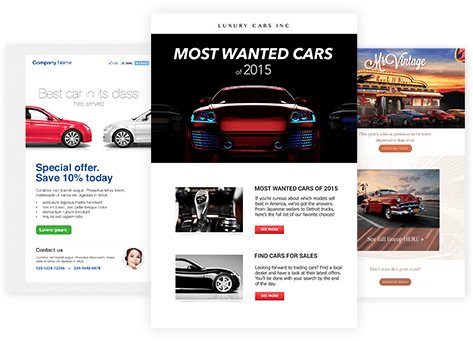
Relevant communication, personalised to the person receiving it, and targeted by location and interest, is one of the most cost-effective tools a car dealer, or any business, has available.
I saw this done properly while consulting for Simply Sports Cars in Sydney, part of the broader work covered in the Lotus Cars case study.
Their database originally held just a first name and email address, which meant every communication had to be generic by default.
I rebuilt it to capture state, vehicle ownership and the type of driving each person actually enjoyed, so future emails could speak to something specific rather than broadcasting the same message to everyone.
How this dealership actually built its list instead
A general public open day, “Ferrari Passion Day,” attracted exactly who you’d expect: families, car enthusiasts, and plenty of people who’d genuinely never be in the market for a car at that price point. A prize giveaway collected names and email addresses from all of them, with no qualification step to separate a genuine prospect from someone who just wanted a look inside a Ferrari dealership for the afternoon.
What actually happened after I entered
- No confirmation email acknowledging my entry, and no option to opt out of further communication
- No thank-you email after the event checking whether I was actually interested in buying anything
- Complete silence about the competition itself, no winner ever announced, which raises a fair question about whether it was run properly at all
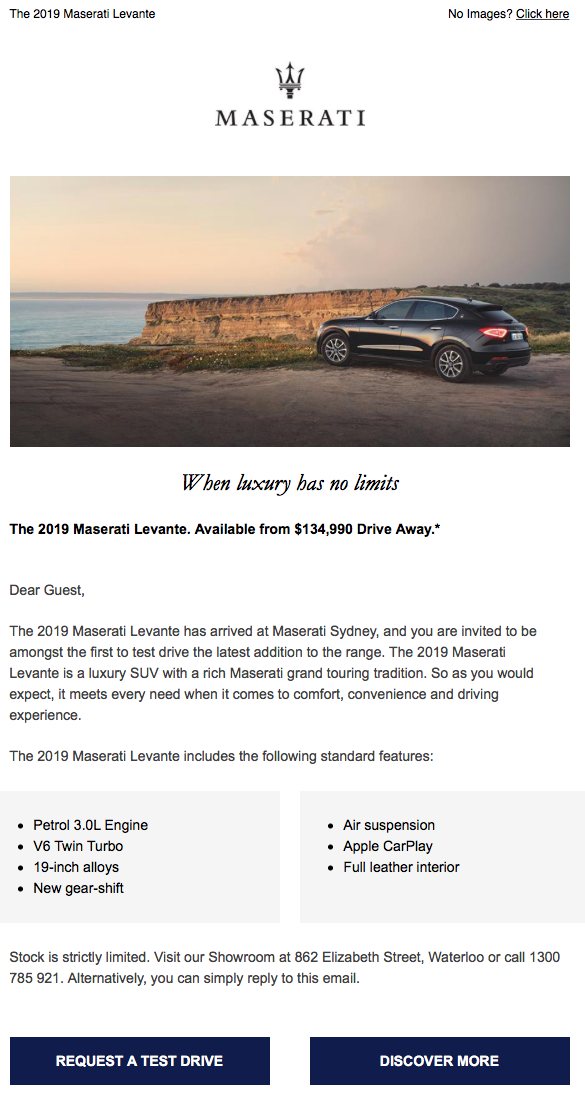
- Weeks later, a generic email arrived from Maserati specifically, despite my never expressing interest in that brand over any other
- The email wasn’t personalised, even though they had my name on file
- I was addressed as “Guest,” on a communication from a premium luxury brand
- The email led with price and specifications rather than anything emotive, an odd choice for a purchase that’s rarely made on spec sheets alone
I unsubscribed, and I’d guess most other attendees who weren’t already serious Ferrari or Maserati buyers did the same.
Why this actually costs a business, not just annoys people
This isn’t really an email marketing problem. It’s the same failure that shows up whenever a business chases volume over quality: vague, generic communication that could apply to anyone tells the recipient they weren’t worth the effort of anything more specific. A database entry isn’t the same as a qualified lead, and treating the two as interchangeable wastes the actual value of collecting the data in the first place.
- It damages the brand experience. A luxury brand asking someone to spend six figures should make every single touchpoint feel considered. An email that can’t even use a name it already has does the opposite.
- It damages credibility. Silence about a competition winner, followed by a generic sales email, makes a person question whether the competition was genuine at all, which is a strange thing to risk for the sake of a database that was never going to be well qualified anyway.
- It wastes real budget. If an agency or in-house team was paid to run this, on a retainer or per campaign, that spend produced a database of mostly disengaged names and a brand impression that pushed genuine prospects toward unsubscribing. It’s worth treating a result like that as a reason to check the actual work being delivered, not just accept the invoice.
How to actually measure whether your email marketing is working
Whether people call, enquire, or buy is the obvious top-level signal, but the detail sits in your email platform and Google Analytics.
- From your email platform (Mailchimp, Campaign Monitor and similar tools all report this): database size and how many have unsubscribed or bounced, open rate (below 10% usually signals a relevance or deliverability problem), click rate, and which specific links people actually clicked.
- From Google Analytics: how email traffic compares to organic search or social media traffic, time on site after arriving from an email (under 30 seconds generally signals weak content or low interest), bounce rate (above 70% suggests most visitors aren’t engaging at all), pages viewed per visit, and whether any tracked conversions, enquiries, bookings, actually followed.
Together, this data tells you plainly whether a campaign is working, not just whether it was sent.
You can audit this yourself, or have someone check it for you
This example is really a demonstration of a broader point: a business owner can and should hold an agency or internal marketing team accountable for what they deliver, with a clear strategy and measurable results, not just activity for its own sake.
If you’re not sure whether your own email marketing is generating qualified leads or just growing a list nobody opens, get in touch and I’ll audit it with you. I build email databases around real, specific information, not just a name and an address, because that’s what actually makes a communication worth opening. If your email marketing isn’t converting the way it should, see how I could help.