

Why waiting room TV screen ads are a waste of money
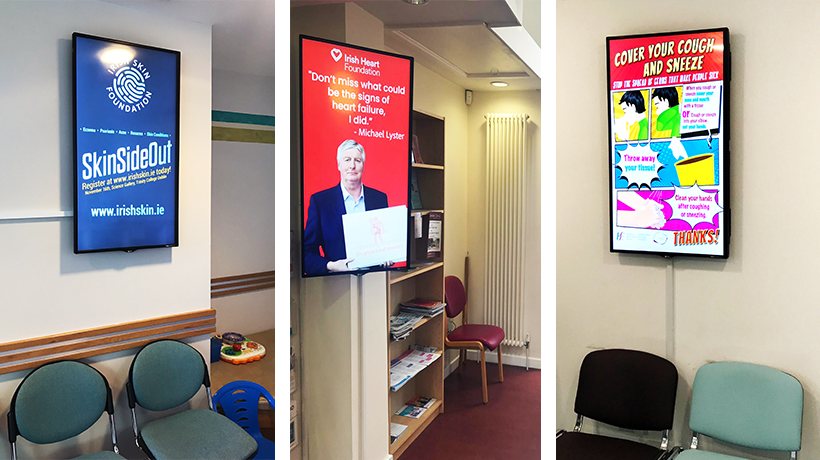
I once sat in a meeting where a marketing team proudly presented their $300,000 airport advertising campaign.
I was working in the Asia Pacific regional marketing role for Logitech at the time. The Australian team had spent north of $300,000 on advertising through the airport, huge backlit billboards, TV screens through the terminal. Their post-campaign summary was full of photos showing off the placements. Prime terminal real estate, big and bold, exactly where they said it would be.
Not one person in any of those photos was looking at it. Heads down, wheeling luggage, staring at their phones. It was genuinely embarrassing to sit through.
Waiting room TV screens are the same mistake at a smaller budget, and I see business owners walk into it every year.


Almost everything written about this topic is written by someone selling it
Before we get into the behaviour, one thing worth knowing: if you search this topic yourself, most of what comes back is published by the companies that install these screens or sell the ad space on them. Guides about attention spans, dwell time and “captive audiences,” written by the businesses whose revenue depends on you believing screens work. That’s not a conspiracy, it’s just how the content around this category is built, and it’s worth knowing before you read any of it as neutral advice.
The pitch always sounds reasonable
A digital screen in a waiting room is, at its most basic, a TV on a wall playing a loop of content and ads. Companies sell this space in medical centres, dental practices and other high-traffic locations, and the pitch is always some version of “reach thousands of people at low cost.” One provider I looked at describes their offering as a network of thousands of screens in medical waiting rooms, delivering health and lifestyle content “at the point of care.”
Sounds sensible. It falls apart the moment you actually watch how people behave in a waiting room.
“…I’m glad we decided to work with you. It’s great how easy the whole process has been and I love how out advertisement reaches out local community…”
“…a wonderful job in promoting our brand. The design team were very obliging and attentive to our needs as a small business, going out of their way to make sure this was a worthwhile experience for us…”
“…We felt this would be a great opportunity for our business as it was not only cost effective but it was different then just your local ad in the paper which most people throw out or flick through without much notice…”
“…In relation to the testing message that has been running, both doctors have said that there has been a marked increase in patients asking for information…”
Watch the room, not the pitch deck

The proposals always show clean mockups: a screen mounted above reception, glowing, clearly visible. What they don’t show you is the actual person standing there. Someone checking in is sorting out where they need to go, getting in line, digging out paperwork, answering questions from the receptionist. They’re not scanning the wall for advertising.
Sit in a real waiting room for ten minutes and watch instead.
Heads down over phones.
People reading.
People staring at nothing, waiting for their name to be called.
Nobody is watching the screen, muted or not, because a waiting room is a place people are trying to get through, not a place they came to be entertained. It’s the same behaviour as a bus stop or a train platform: the screen is there, the attention isn’t.

Vague testimonials are the biggest tell
Every agency selling this space has glowing quotes on their site. Read them closely and you’ll notice what’s missing: a number. “Great process,” “wonderful job,” “easy to work with,” none of it says how many extra customers came in, what it cost per lead, or whether anything else was running in the business at the same time that could explain the result. A testimonial that can’t point to a measurable outcome isn’t evidence the advertising worked, it’s evidence the relationship was pleasant.
The actual numbers behind a typical pitch

Around $70 a week is cheap. But the proposal rarely tells you the rotation, so your ad might display once every ten minutes, whether the price includes producing the actual ad, or any guarantee of how many people will actually be in the room when it plays. Cheap access to an audience that isn’t watching still isn’t a good deal, it’s just a cheap way to not reach anyone.

What actually is effective advertising, versus just being seen
Effective advertising has to be measurable against an objective. A Google Search ad tells you exactly how many people clicked, what they searched to find you, and what they did on your site afterwards. You can even target it by suburb, time of day or device. A waiting room screen tells you none of that. It’s a shotgun, not a rifle, and you’re paying to spray a message at a room full of people who’ve already tuned out every screen they’ve seen today.
If you still want to try it, test it properly
I’m not against waiting room advertising on principle, I’m against spending money on anything nobody can prove worked. If you want to genuinely test it rather than guess:
- Run it in isolation. Don’t have three other campaigns running at the same time, or you’ll never know what caused what.
- Go and sit in the actual room for ten minutes before you commit. Watch whether anyone looks up.
- Put a specific, trackable offer on the screen, a unique code or a dedicated URL, so a $70 spend becomes a real cost-per-lead you can compare against Google or Meta ads.
- Negotiate a one or two week trial with that trackable offer before signing anything longer.
- Ask for the price to come down. The screens and the hardware are already paid for and installed, so every advertiser after the first is close to pure profit for the agency. There’s usually more room to negotiate than the rate card suggests.
That’s the difference between spending on advertising and gambling on it: one of them tells you what happened.
If you want a second opinion on a media proposal before you commit budget to it, get in touch and I’ll pull it apart with you.