Sicilian Food Tours: from a DIY website to $100,000+ in bookings
Client location: Sicily, Italy
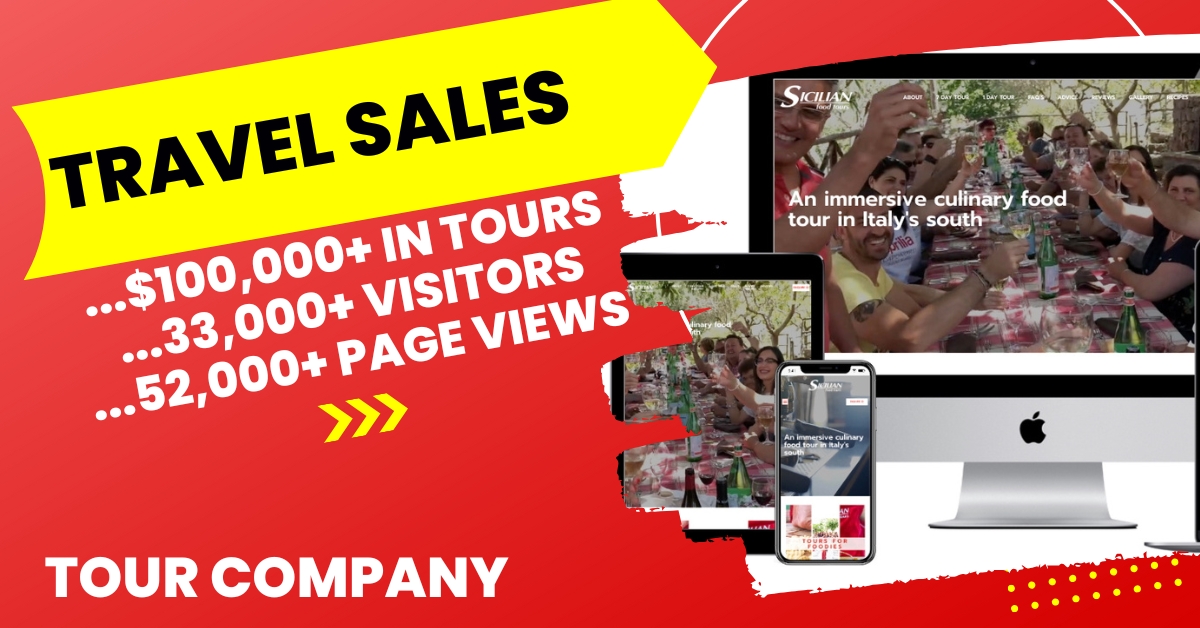
- Over $100,000 in tour bookings, at $4,000 per person, with multiple sold-out dates
- 52,000+ page views and 33,000+ visitors in the first year alone
- 475+ registered lead form submissions confirmed in an independent data check two years later
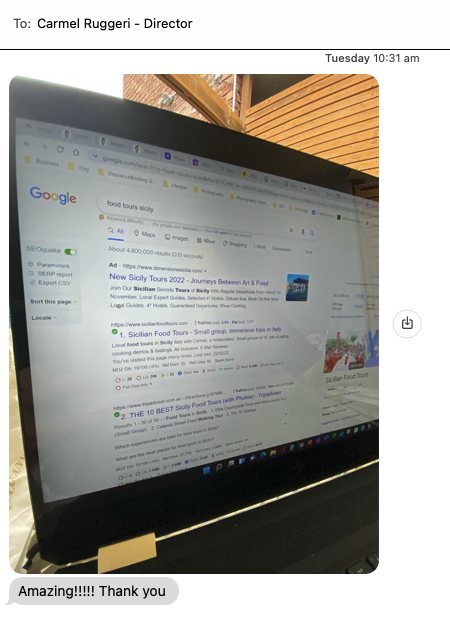
- Ranking for competitive terms like “food tours Sicily” against TripAdvisor and Viator, now winning an AI Overview placement too
- Two separate, real data pulls, 2022 and again from March 2023 to April 2025, both confirming the same thing: this still works
This has genuinely been one of my favourite marketing projects.
Sicilian Food Tours specialises in travel to Sicily, my father’s birthplace. Carmel, a friend who’d been running these tours for years off a self-built site, wanted to go bigger: sell out more tours and reach a genuinely global audience, without paying away a large commission to third-party booking platforms to do it.
Where it started
A close friend had built Carmel’s website years earlier, and for what she needed at the time, it did the job. Carmel was already well known and well connected in Sydney’s food scene, with a genuine network of friends, family and past guests she could draw on to fill a tour. That network carried the business a long way on its own.
It’s an incredibly common story, and not just for tour operators. A business owner gets a friend to build something, or builds it themselves on a free platform, because it feels like the sensible, low-cost option, and because the site looks fine once it’s live. What most business owners don’t realise is that looking fine and being findable are two completely different things.
Without the right technical setup, page structure, and genuinely useful content behind it, a site like that will never get properly indexed by Google, let alone win a single relevant keyword. I’ve written elsewhere about exactly why free and self-built website builders carry this same risk, easy to launch, genuinely difficult to ever get found through.
What that meant in practice for Carmel: the site functioned as an online business card, something to hand an already-interested person, a name, some photos, a way to confirm the business was real, but nothing capable of reaching anyone who didn’t already know her.
Growth depended entirely on word of mouth and the occasional social media enquiry, not on anyone finding Sicilian Food Tours who didn’t already know Carmel.
What I actually did
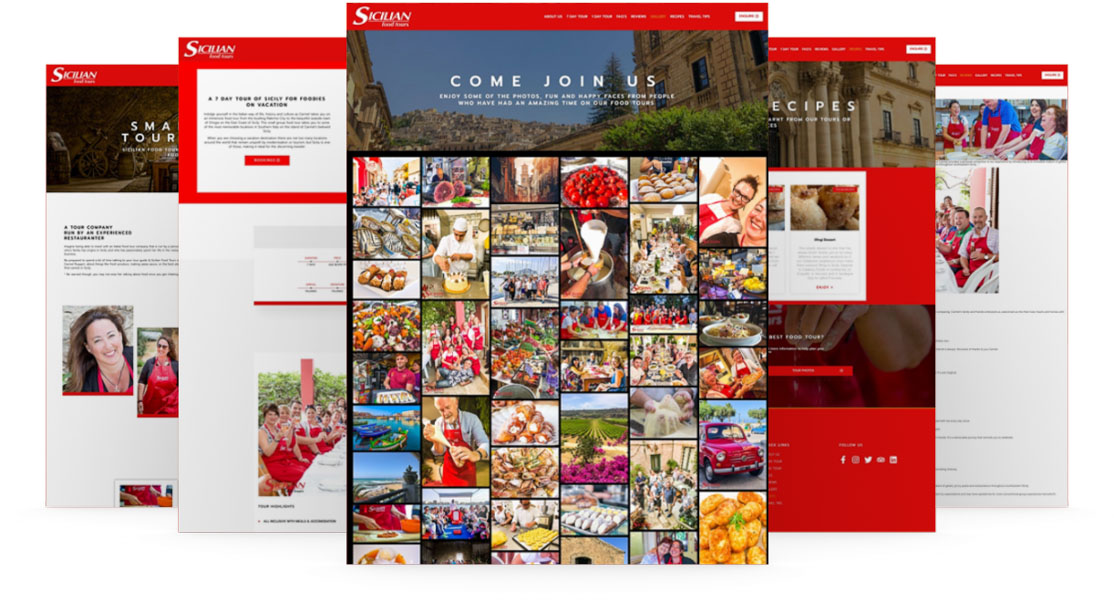

- Rebuilt the site on WordPress with Elementor for genuine long-term management
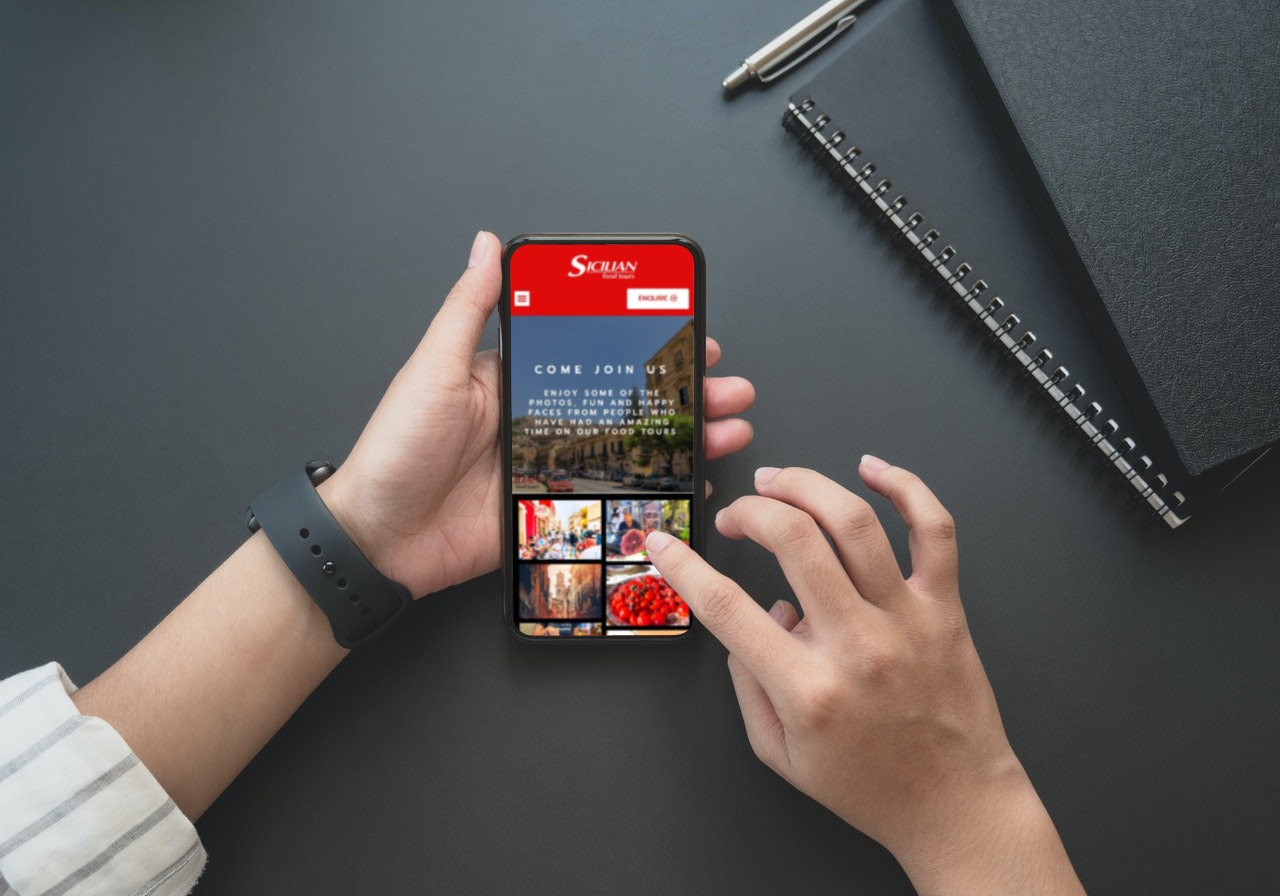
- Deliberately avoided stock photography in favour of real, colourful images of people actually eating, laughing and engaging with the food on tour, a direct contrast to competitors. Viator and TripAdvisor listings for the same category lean heavily on generic stock shots, a close-up of a tomato tells a visitor nothing about what the actual experience feels like
- Created and edited a hero video for the homepage, mixing stock footage with real mobile phone clips
- Edited, renamed and SEO-optimised every photo
- Wrote copy for every page, focused on the people and the experience rather than a generic destination pitch
- Built proper on-page technical SEO from day one
- Connected Google Analytics and Search Console for genuine performance tracking
The results in the first year, 2022
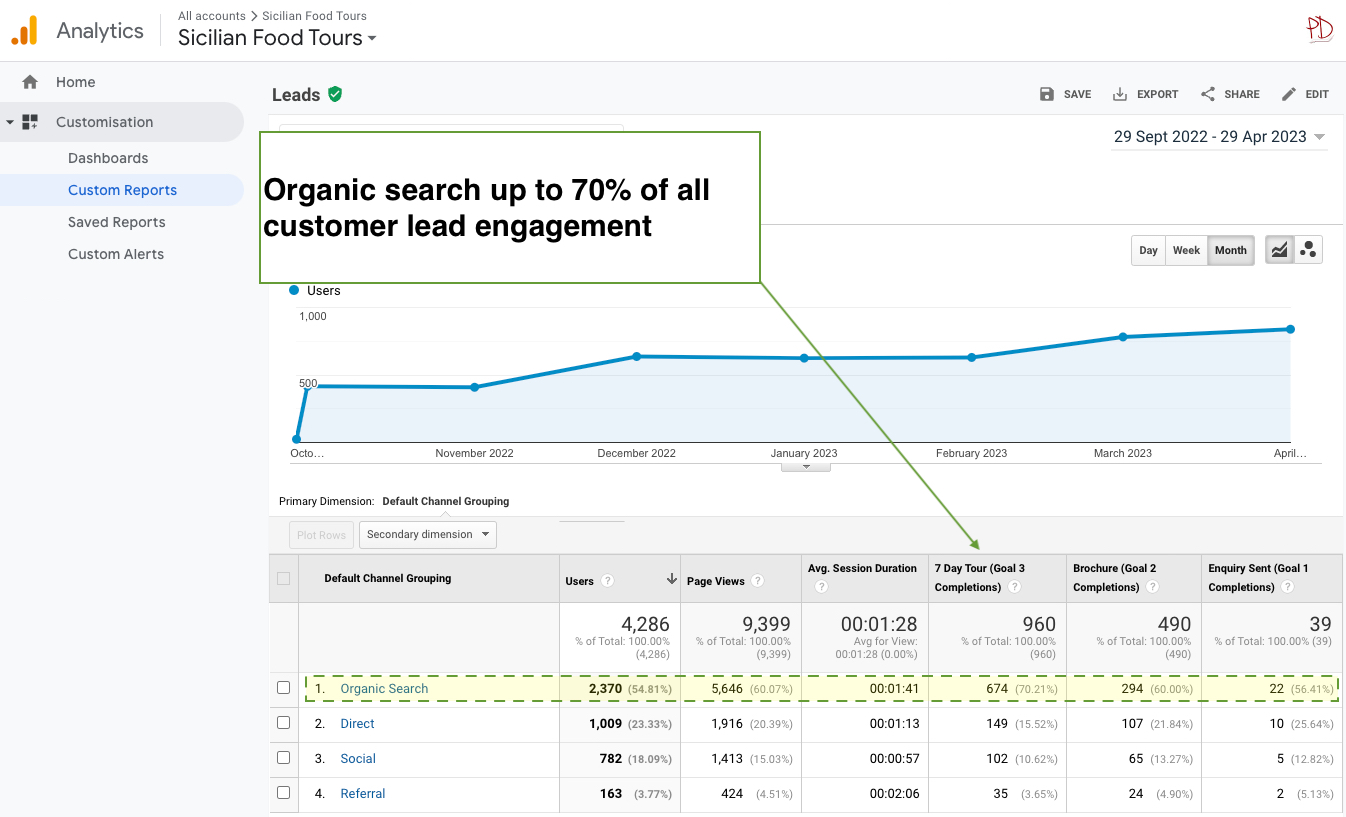
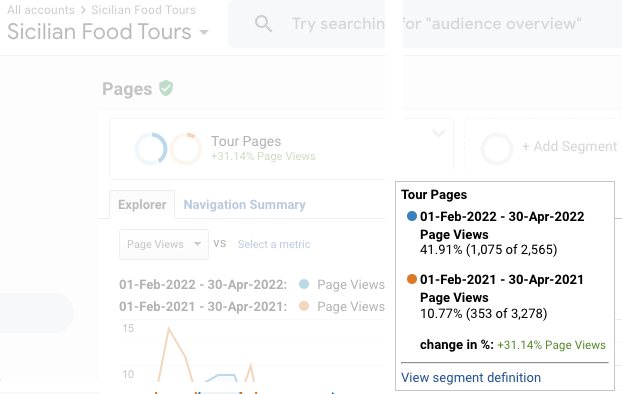
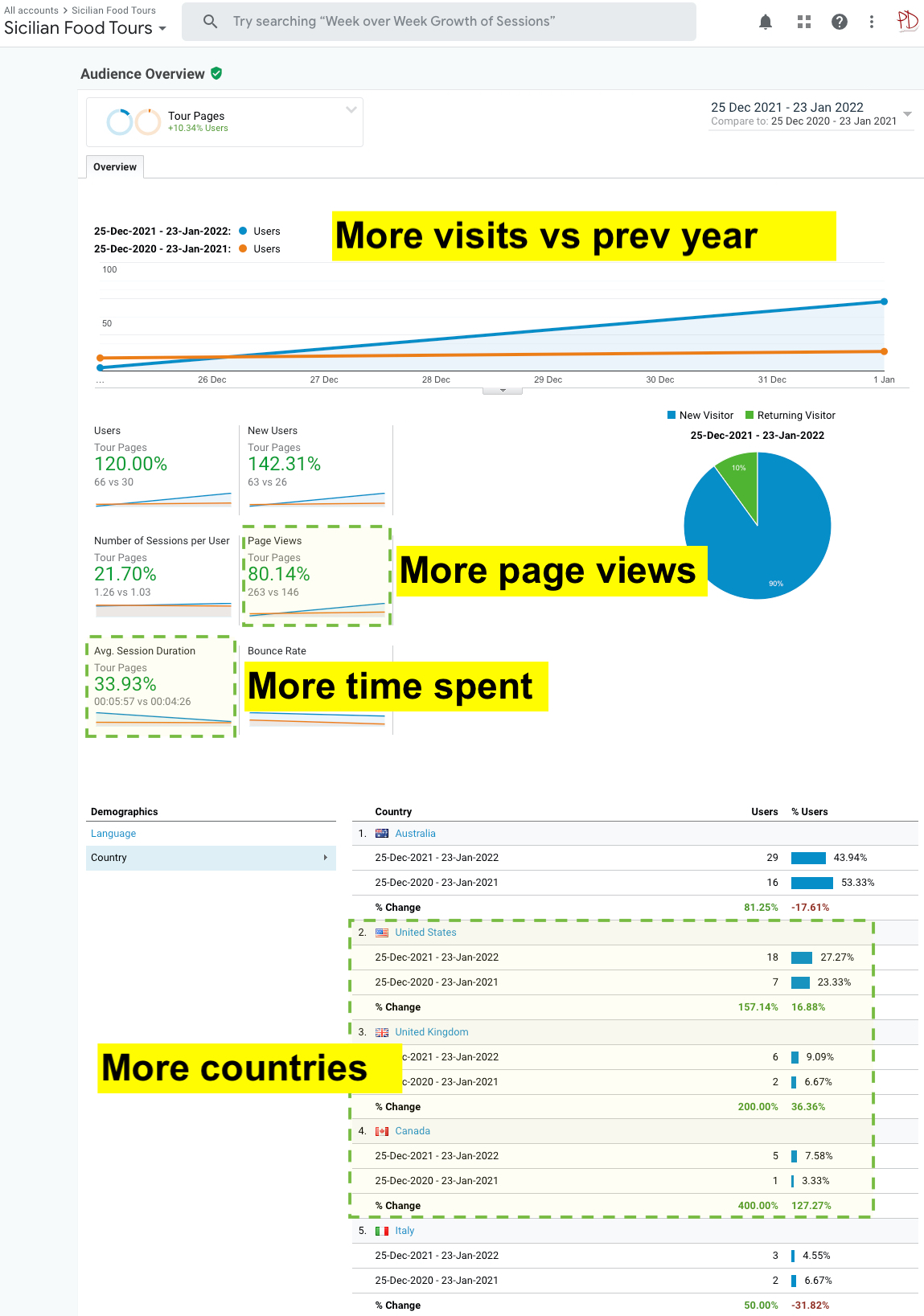
- Over 52,000 page views and 33,000+ visitors, the large majority from organic search.
- More than $100,000 in tour bookings, at $4,000 per person for immersive 7-day experiences, not a $100 walking tour, with multiple groups of 15 to 20 people selling out completely
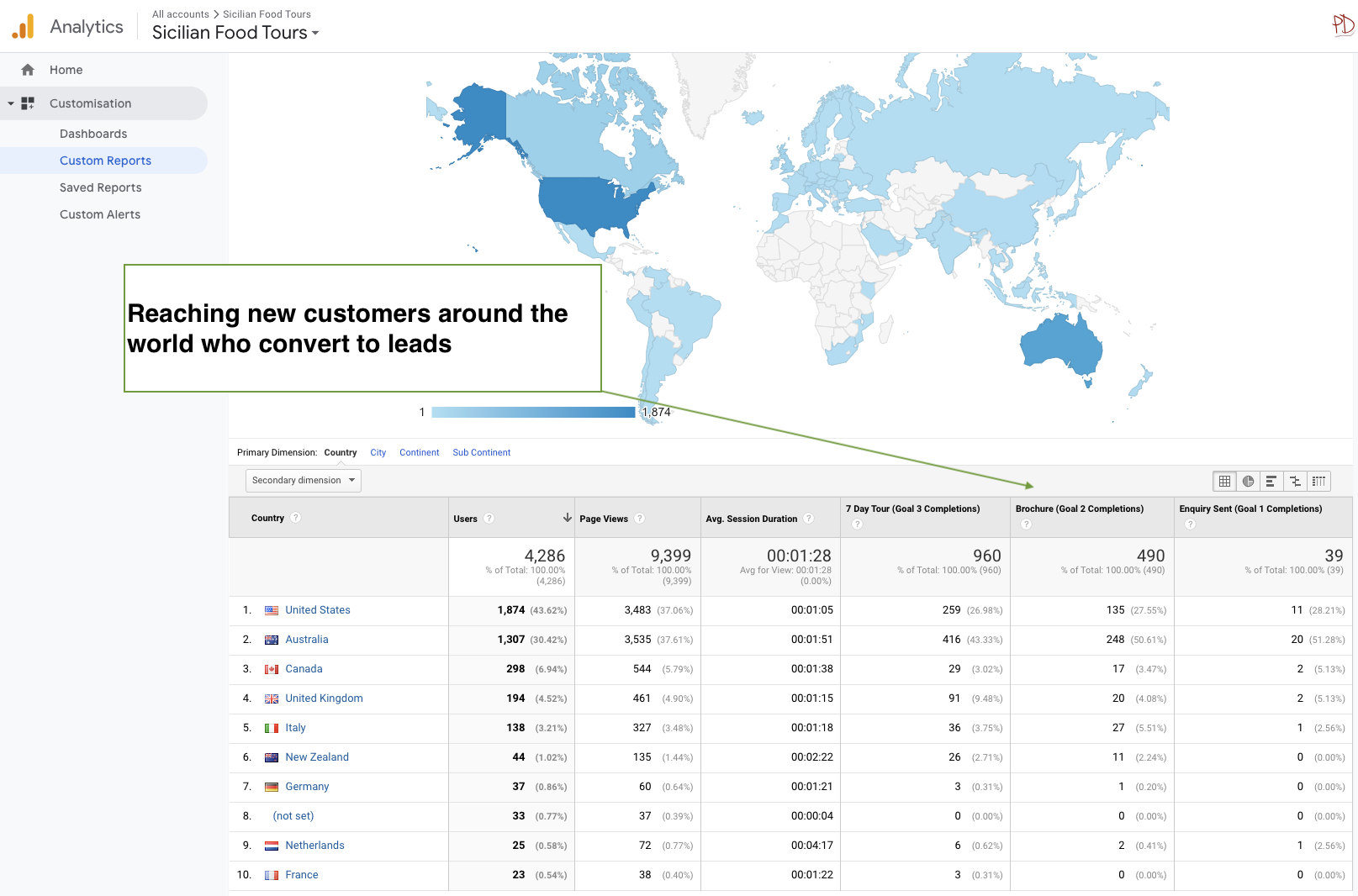
- USA visitors reaching 32% of all traffic, direct progress against the exact market opportunity identified at the start
- Ranking for genuinely competitive terms like “food tours Sicily,” against far larger, more established competitors

Checked again, independently, March 2023 to April 2025
Rather than just claim the results held up, I went back into the real data more than a year later and checked. You can watch that check happen live on screen here, the actual Google Analytics numbers, not a summary.
- 475+ registered lead form submissions tracked directly, on top of enquiries through social media and other channels
- Ranking across 1,200+ distinct search phrases related to Sicily food tours
- A dedicated page built around a specific phrase spotted in the site’s own search data, “Sicily tours from Australia”, has since won a placement inside a Google AI Overview, genuine evidence that specific, well-targeted content can still earn visibility as AI-driven search grows
- Recipe content, not even the core offer, generated around 2,000 search visits across just three specific recipe pages in three months alone, real evidence that useful content adjacent to the core business can pull its own weight
- Real third-party press exposure across outlets including Not Quite Nigella, the BBC, SBS and Flickr, plus mentions on Reddit, all contributing genuine backlinks and visibility beyond search alone
- Close to 650 people reached the main tours page from organic search in just a few recent months, on a site that’s barely been touched since the original build
Two independent looks at the real data, roughly two years apart, telling the same story. That’s a genuinely harder thing to fake than a single results screenshot.
Where there's still real room to grow
Being straightforward about this, since it’s a genuinely useful example of how search data points to the next move: the site ranks well for “Sicily food tours” and similar location-specific phrases, but far more tentatively for the broader “food tours Italy,” a harder but realistic opportunity if content were ever built out for other regions.
There’s also currently very little content for shorter, single-day tour experiences, meaning some search traffic arrives looking for something the business doesn’t currently offer in detail. None of this is a gap in what was built, it’s the deliberately unclaimed next stage, exactly the kind of decision Search Console data is for.
What Carmel actually said
“Wonderful professional service and definitely works wonders for your business.”
This is a genuinely good example of building something properly once, rather than constantly patching a site that was never built to last, and proof that an independent tour operator can compete directly with giants like TripAdvisor and Airbnb Experiences if the foundation is done properly.
It’s the same underlying story behind the PictureMe case study, a different niche entirely, but the same lesson: an independent operator getting found on their own merit instead of depending on a platform that’s losing ground to AI-driven search.
I build tour and travel websites around the real experience a business offers, not generic stock imagery, and around genuine SEO foundations that keep working years later. If you want a site that earns bookings long after launch, see how I could help.