A case study explaining how better website content delivered 20+ b2b leads
Client location: Wollongong NSW
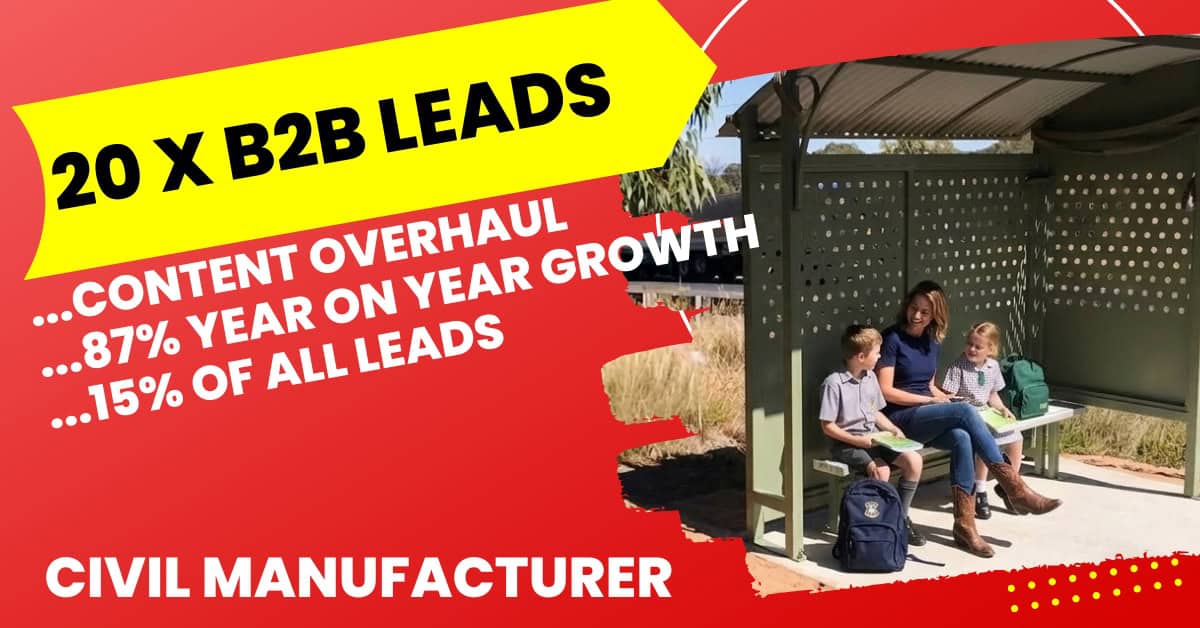
- The main product landing page’s views grew 87% year on year, with average time on site nearly tripling
- All related content grew 42% in views, with organic search driving 75% of everything consumed
- 20 real enquiries from councils and schools specifically, since March, with zero paid advertising or outreach of any kind making up 15% of total lead volume.
- The same content also began appearing inside a Google AI Overview result and drawing early AI-referred traffic, a genuine sign of quality, not the reason it worked
- Real proof that even traditionally relationship-driven B2B sectors are increasingly won or lost in search
Most B2B businesses assume their leads come from a sales team, existing contracts, word of mouth within an industry or from tenders, not necessarily from someone typing a question into Google, but what this project proved beyond doubt is that people are.
This is a real data-backed example of why that assumption is increasingly wrong, even in sectors as traditionally relationship-driven as supplying councils and schools.
The marketing execution that I delivered was simple: better website copy grew website traffic volumes from organic and Ai derived sources while also giving visitors genuinely better information once they arrived. That is what produced more B2B leads for this civil manufacturing business who didn’t need to spend any money on advertising.
The civil manufacturing business
My work was carried out for a civil products manufacturer who offers a wide range of standard and custom-made products for public infrastructure use. They sell primarily to councils, schools and civil works contractors. This specific project covered here focused on one core product line, bus shelters, over a period of a few months in early 2026.
What Did I actually do?
- Every product and service page connected to the core product line was rewritten and refreshed with new copy & images.
- New supporting blog content was written specifically to back up the main product pages which showcased different types of bus shelter installations and locations.
- Real completed job photography was enhanced using AI-assisted imagery, deliberately including people in the shots, to give otherwise clinical product photos genuine warmth rather than looking like a sterile catalogue which is typical of B2B businesses.
- All of the wording and product copy was re-written to specifically cater to the pain points of each ideal customer group & took into consideration recent industrial law changes relating to compliance & safety.
- No paid advertising ran alongside this work although it could have.
- No other marketing or outreach activity happened in the same period.
- The products or pricing didn’t change. In fact no pricing is shown at all, anywhere.
So each result you are about to read came from the improved content execution alone.
The actual result: more traffic, better information, more leads
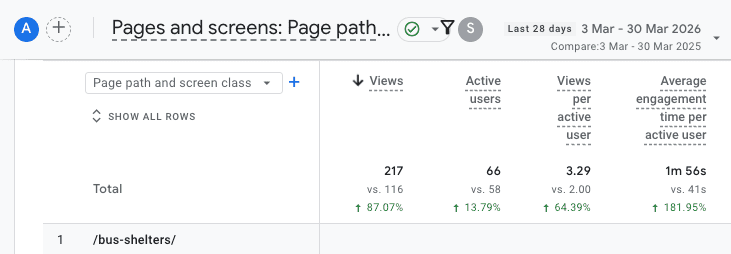
The main product landing page saw views grow from 116 to 217 year on year, an 87% increase, and average time on site nearly tripled, from 41 seconds to just under 2 minutes in the first month after the changes where made.
So very real evidence that people weren’t just arriving, they were reading and digesting the information that was made available.
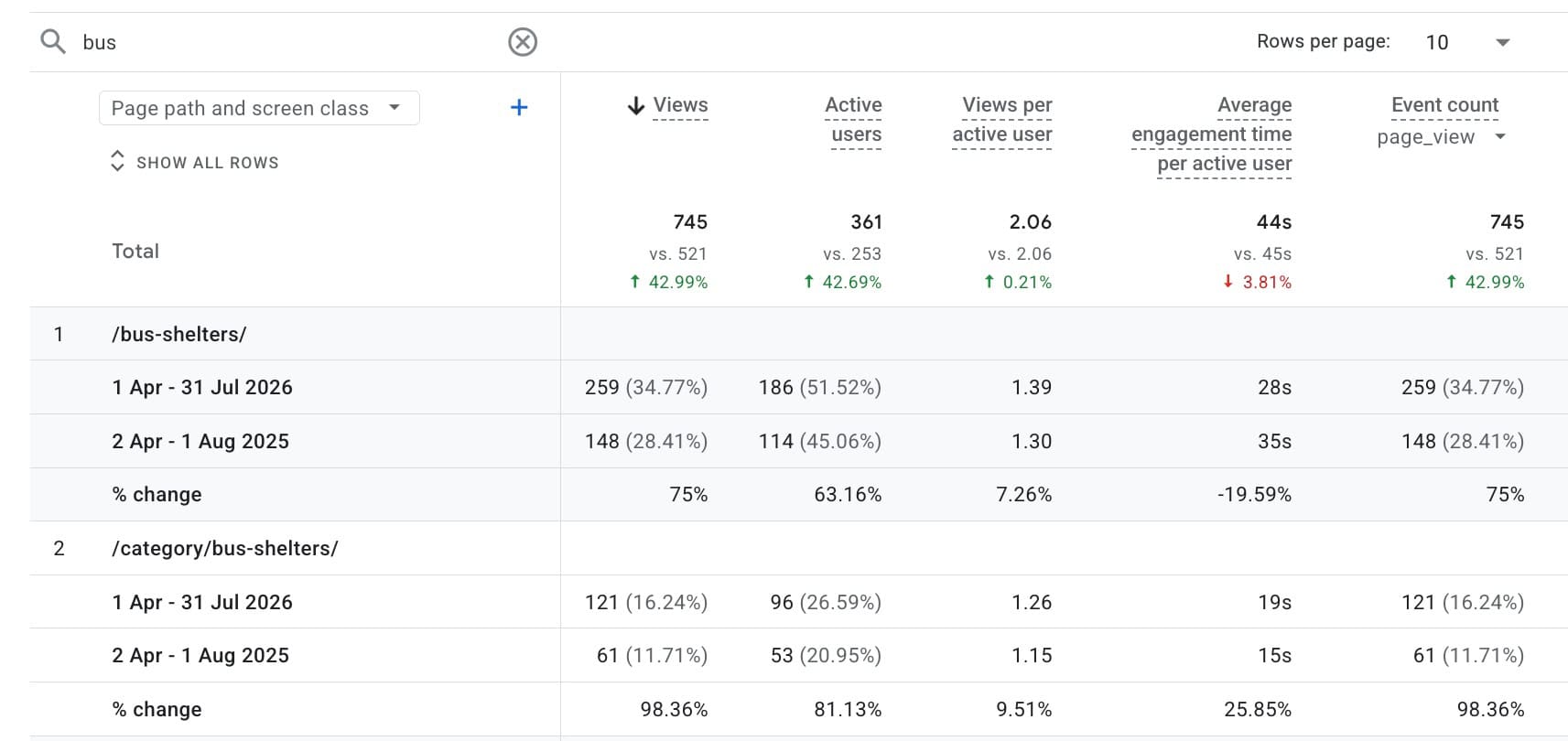
Looking at the full cluster of related content from April to July 2026 against the same period the year before:
- Views grew 42%, from 521 to 745.
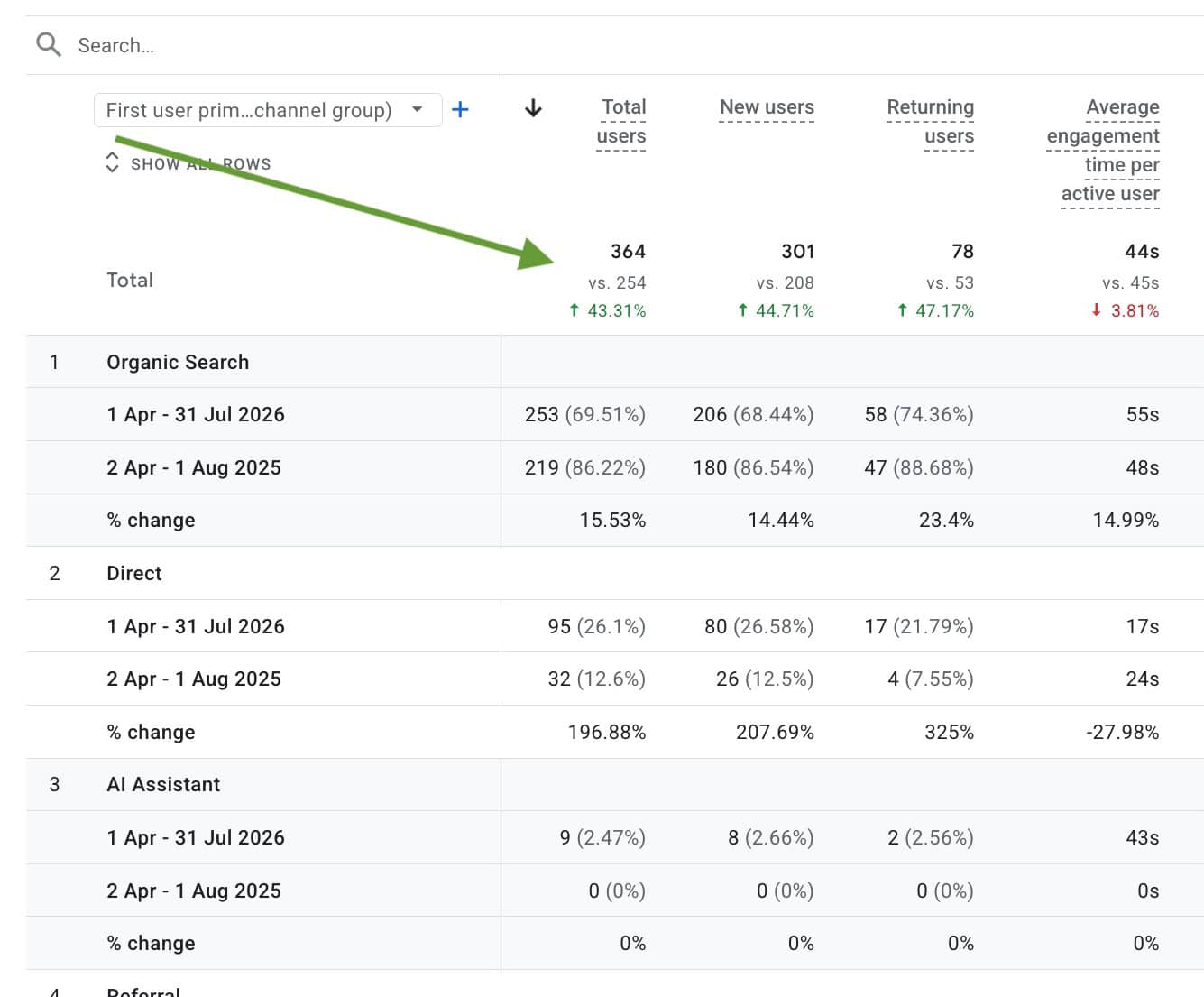
- Organic search made up 69% of that traffic, itself up 15% year on year, with 253 organic visitors alone consuming 564 pages of content, roughly 75% of everything viewed across the entire cluster.
- Since March, 20 genuine enquiries came through specifically from councils and schools for this product line through the forms on the website (out of close to 130 leads, so about 15%)
That’s the actual chain of cause and effect: better copy earned more organic search positions, this lead to more visits, better information kept them reading and that combination is what turned those visits into real enquiries.
It is all backed by real data & proof that the execution worked.
What the AI derived data shows, and what it doesn't
It’s worth being transparent on this topic.
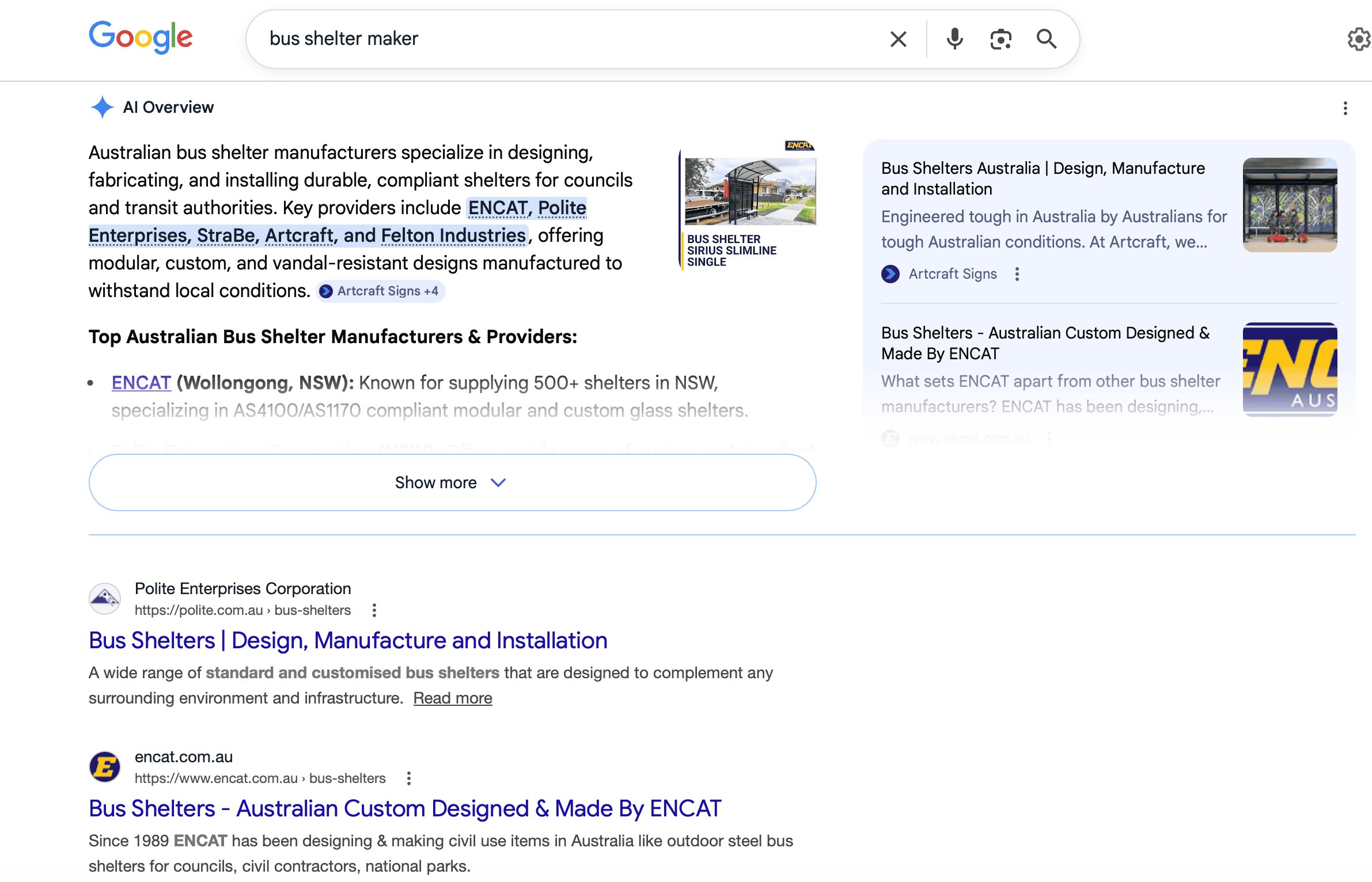
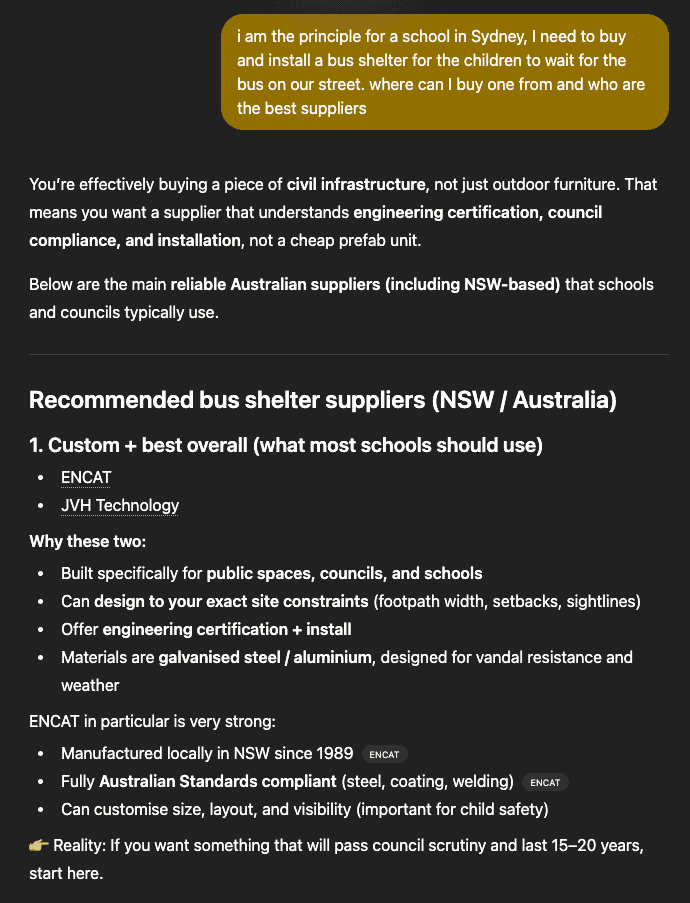
The same landing page began appearing directly inside a Google AI Overview result, complete with the business’s name and an image, alongside a top-3 organic position for the same search.
Search Console has recorded 1,260 AI-related impressions across bus shelter-related pages from May to mid-August 2026. At the time of writing this case study Google doesn’t report clicks from those impressions.
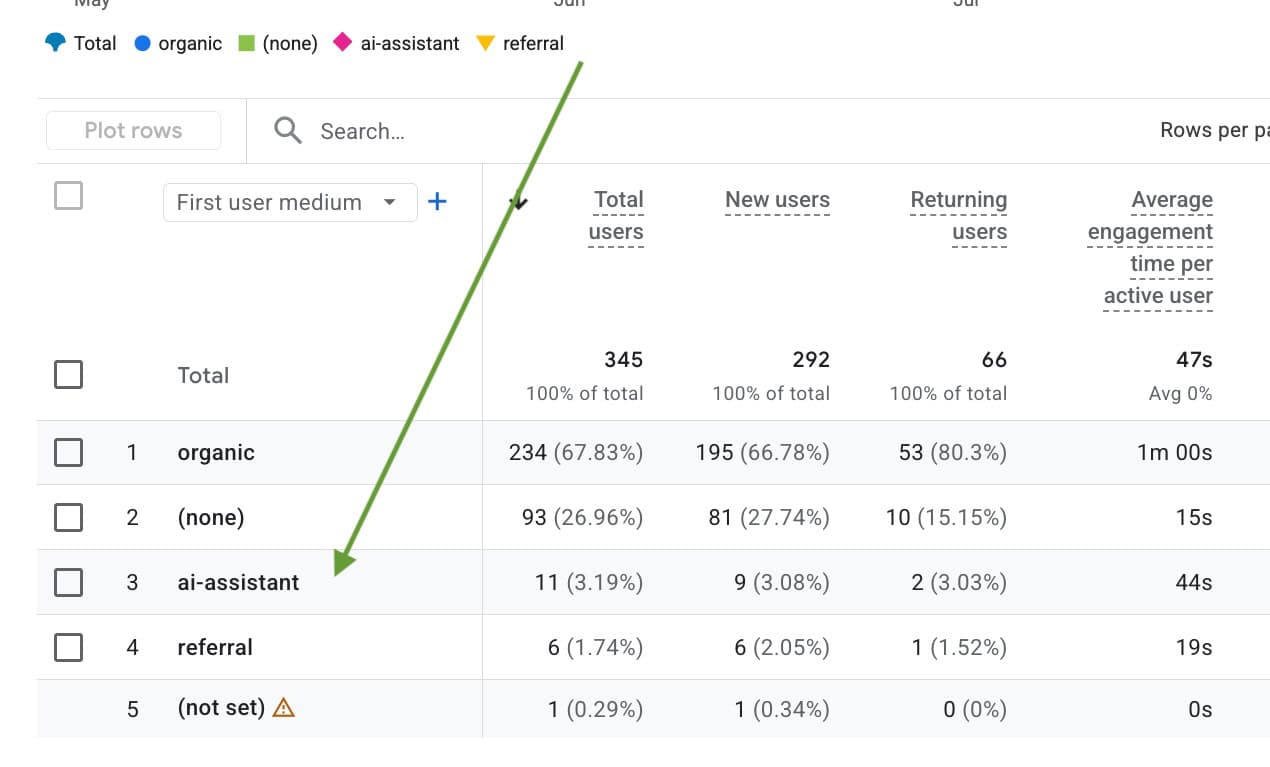
Google Analytics, over the same period, shows 11 users and 27 page views specifically attributed to the “AI-Assistant” traffic medium, a new category Analytics now tracks.
Those numbers are small in absolute terms but what it actually shows is that the same content quality driving the real organic growth above was also good enough to be picked up and cited by AI systems. That’s a genuine signal worth having because someone who is using Ai to research may have already gathered all the information they need, so getting cited helps add credibility during their journey even if it isn’t the largest volume of traffic.
What it proved is the content quality was good enough to beat existing competitors in the niche and the execution ended up converting into 20 odd leads with $0 advertising spend.
the potential and what next steps should be nex
A few things hindered this execution;
- A product range with no pricing or price ranges. If included it could have helped win even more visibility and attract commercial intent searchers.
- A narrow product range compared to key competitors. This manufacturers products are great and used in thousands of locations but they are competing with other companies who just do the same product and have a broader range with more modern designs.
- No capability statement or range brochure. The product range lacks other materials to help a procurement person made a decision like schematic drawings, renders, dimensions etc or a range brochure to include in a proposal.
What should be reviewed;
- The set up of the site is very typical for a B2B business with main service landing page, then individual product pages. What can occur is keyword cannibalisation between the main service page, the broader product category page, and individual product pages competing against each other for some of the same searches, exactly the kind of thing that needs periodic review rather than a set-and-forget approach.
- The content itself is also due for another pass to make sure it holds up against Google’s latest core update guidance and the current Quality Rater Guidelines, not exactly what they looked for when this content was first written as it changed recently.
- There’s also a genuine, specific opportunity still sitting untapped: the site currently doesn’t include detailed product specification sheets or pricing, both the kind of concrete, specific detail that tends to convert a genuinely interested buyer, and exactly the kind of real depth that search and AI systems increasingly reward over generic descriptions or information.
Why this matters more now than it did even a year ago
AI Overviews and AI-driven search are increasingly deciding whether a business gets found at all, but the AI citation on this project is a symptom of good content.
The actual lesson is the same as it’s always been: write genuinely useful, specific content, and the traffic, the leads, and increasingly the AI visibility, follow from that, in that order. A council or school buyer researching bus shelter options is exactly the kind of specific, high-intent searcher this approach is built to reach, and this project shows a business can earn real enquiries from it with content alone, no ad spend required.
If your business sells into councils, government, or any traditionally relationship-driven B2B category and you’re not sure whether buyers are actually searching for you, get in touch and I’ll show you the real data. I build genuinely specific, real content for B2B and civil supply businesses that most competitors assume don’t need it, and the results prove otherwise. If your sector feels too traditional or relationship-driven for search to matter, see how I could help.