What Facebook Shops teaches us about building on someone else's platform

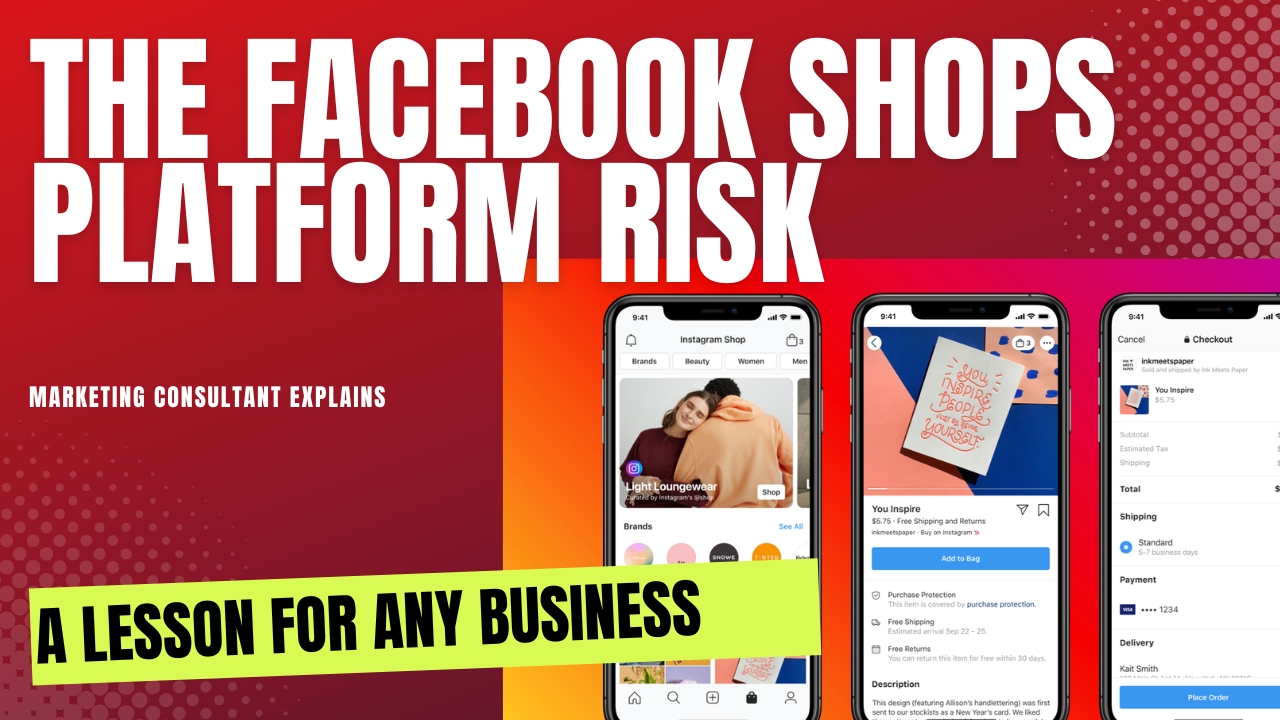
In May 2020, Facebook launched Facebook Shops with a promise: businesses could build a storefront across Facebook and Instagram, customers could browse, ask questions and complete a purchase without ever leaving the app. Mark Zuckerberg framed it as Meta helping small businesses move online:
“These organisations offer powerful tools to help entrepreneurs start and run their businesses and move online. Now they’ll help small businesses build and grow their shops on Facebook and use our other commerce tools.”
Thousands of small businesses built their entire online selling process around exactly that promise: discovery, conversation and checkout, all inside Meta’s ecosystem, no separate website checkout required.
Then, in 2025, Meta changed its mind
As of June 2025, Meta began retiring native in-app checkout on Facebook and Instagram Shops.
Businesses can still show catalogues, tag products in posts, and let customers discover items without leaving the app, but the actual purchase now redirects to the business’s own website. Returns, refunds and order management moved out of Meta’s Commerce Manager entirely, back onto whatever the business runs itself.
For a business that built its checkout process natively inside Facebook and Instagram from the start, that’s not a minor UI update. It’s the platform removing a core piece of functionality the business had structured its operations around, with no vote, no negotiation, and no say in the decision.
This is what platform risk actually looks like
It’s easy to treat this as a Facebook-specific story. It isn’t. It’s a specific, dated, verifiable example of a much broader risk: when a core function of your business, how you sell, how you get found, how you communicate with customers, lives entirely inside infrastructure you don’t own, you’re exposed to decisions made somewhere you have no visibility into and no vote on.
The platform isn’t doing anything wrong by changing how it works. It’s a business optimising for its own priorities, which won’t always line up with yours. The mistake isn’t using the platform. It’s building something load-bearing entirely on top of it with no fallback.
The same structural risk applies to Shopify, or any hosted platform
This isn’t a claim that Shopify is about to do anything similar, there’s no evidence of that, and it’s a genuinely well-run platform millions of businesses rely on successfully. But the structural risk is real regardless of how well-run a platform currently is: Shopify hosts your store, sets the rules, takes a percentage, and like any company, could change its pricing, policies, or terms in ways outside your control. That’s not a prediction about Shopify specifically, it’s true of any hosted platform your business depends on entirely, by definition, because you don’t own the infrastructure it runs on.
The question worth asking isn’t “is this specific platform trustworthy today.” It’s “if this platform changed the rules tomorrow the way Meta did in 2025, how much of my business would that break.”
What owning your own platform actually buys you
A site built on self-hosted WordPress is structurally different. You own the code and the data. You can move to a different host if you’re not happy with the one you’re on. Nobody can unilaterally flip a switch and remove a feature your entire business depends on overnight, the way Meta did with native checkout.
That’s not zero risk. You still depend on your hosting provider, your domain registrar, and WordPress remaining a maintained, open-source project. But the difference in kind is real: those are relationships you can change if you need to. A feature living entirely inside someone else’s closed platform isn’t.
The practical takeaway
This doesn’t mean avoid Facebook Shops, Instagram, Shopify or any other platform, they’re genuinely useful for discovery and reach, and I’ve written separately about why owning your own website content compounds in a way social platforms don’t. It means being deliberate about which parts of your business are portable, and which are entirely dependent on one company’s continued goodwill.
Use the platforms for what they’re good at, discovery, reach, conversation. Keep the parts you can’t afford to lose overnight, your checkout, your core content, your customer relationships, somewhere you actually control.
If you’re not sure how much of your business is currently dependent on infrastructure you don’t own, get in touch and I’ll help you map it out. I build client strategies around what they actually own and control, not just what’s convenient today, because convenient today can change without warning. If you want to know how exposed your business is to a platform decision outside your control, see how I could help.