Would your business benefit from digital marketing services?
Short answer: it depends, and any consultant who tells you it’s an unconditional yes is selling you, not advising you.
Some businesses genuinely do fine without it. I’ve worked with businesses that were healthy on referrals and an existing client base alone before I got involved, the work wasn’t about rescuing a failing business, it was about showing them how much opportunity was sitting untapped that they didn’t know existed. That’s a different conversation to “your business is failing without this,” and it’s a more honest one.
Here’s a real way to test whether it applies to you, and what’s actually changed when it has.
The honest test: three questions most business owners can't answer
Before spending a dollar on digital marketing, ask yourself these, they take two minutes and tell you more than any sales pitch will:
- Do you know what percentage of your website traffic comes from organic search, versus paid ads, versus people typing your name in directly?
- Could you name the three search terms that actually bring you customers, versus the ones you assume do?
- If someone else set up your current website, Google Ads account, or SEO, has anyone independently checked their work against your own Analytics and Search Console data?
If you can’t answer at least two of those, that’s not a character flaw, most business owners can’t. It’s also exactly the gap that determines whether outside help is worth paying for right now, or whether you’re better off spending that money elsewhere for now.
What actually changes when it's a genuine fit
Not generic promises, real outcomes from real engagements:
- Catching work that was never actually done. In the RealServe case study, I uncovered $30,000 worth of SEO work a business had paid for that had never actually been delivered. Nobody had checked.
- Getting a client out of a bad contract before more money was wasted. In the Slip Away case study, I helped a client exit a $30,000 contract built on work that didn’t hold up to scrutiny once someone actually looked at it.
- Reversing a genuine decline on a small budget. The Lotus Cars case study shows $3M+ in sales growth, the brand’s first growth in four years, delivered on a marketing budget under $50,000. That wasn’t about outspending competitors, it was about knowing where the actual leverage was.
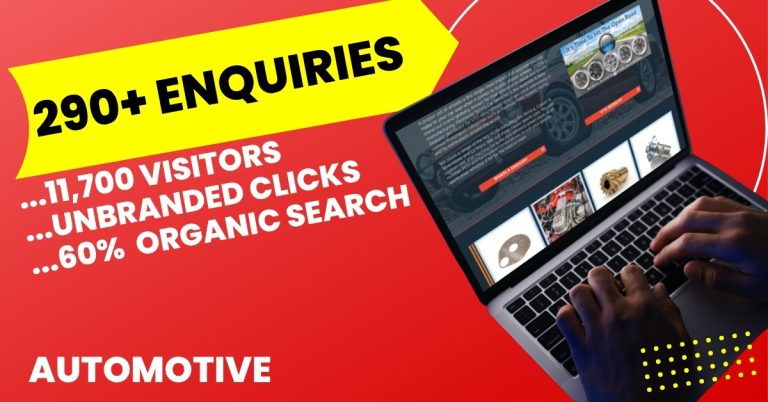
- Results that keep compounding after the engagement ends. More than three years after I finished working with Adrenalin Offroad Centre, organic search still delivers 57.8% of all their website traffic, with no ongoing retainer. That’s the difference between a marketing tactic and a durable asset.
- Catching a genuine mistake before it got expensive. I’ve audited a Google Ads account where the person running it, paid as the expert, didn’t actually know if their own setup was correct. Ads were showing in cities the business didn’t even serve.
None of these are hypothetical benefits. They’re what happened when someone actually checked the work against the real data instead of assuming it was right.
Why this matters more now than it did a few years ago
It’s never been easier to produce something that looks like expert marketing help without any real judgement behind it. Generic AI-written content, mass cold-email campaigns from appointment setters who’ve never seen your website, automated Google Ads “recommendations” that quietly undo careful targeting, all of it is more common now than it was even a couple of years ago, and all of it is designed to look competent at a glance.
That makes the actual differentiator sharper, not softer: whether someone is checking real data against real claims, or just producing something plausible-looking and hoping nobody asks questions. A domain name, a social media following, an AI-generated About page, none of it substitutes for someone who’ll actually verify what’s working and what isn’t.
What I'd actually recommend
If you answered “yes, I know this” to most of the three questions above, you may already be in good shape, and paying for a full engagement might be solving a problem you don’t have. If you couldn’t answer them, that’s worth a proper look before you spend anything further, on advertising, on a rebuild, on anything, because you’re currently making decisions without the information that would tell you if they’re working.
If you want a straight answer on which category you’re in, get in touch and I’ll tell you honestly, including if the answer is that you don’t need much help right now. I check the real data before I tell anyone they need marketing help, not the other way around. If you want an honest read on whether your business would actually benefit, see how I could help.