
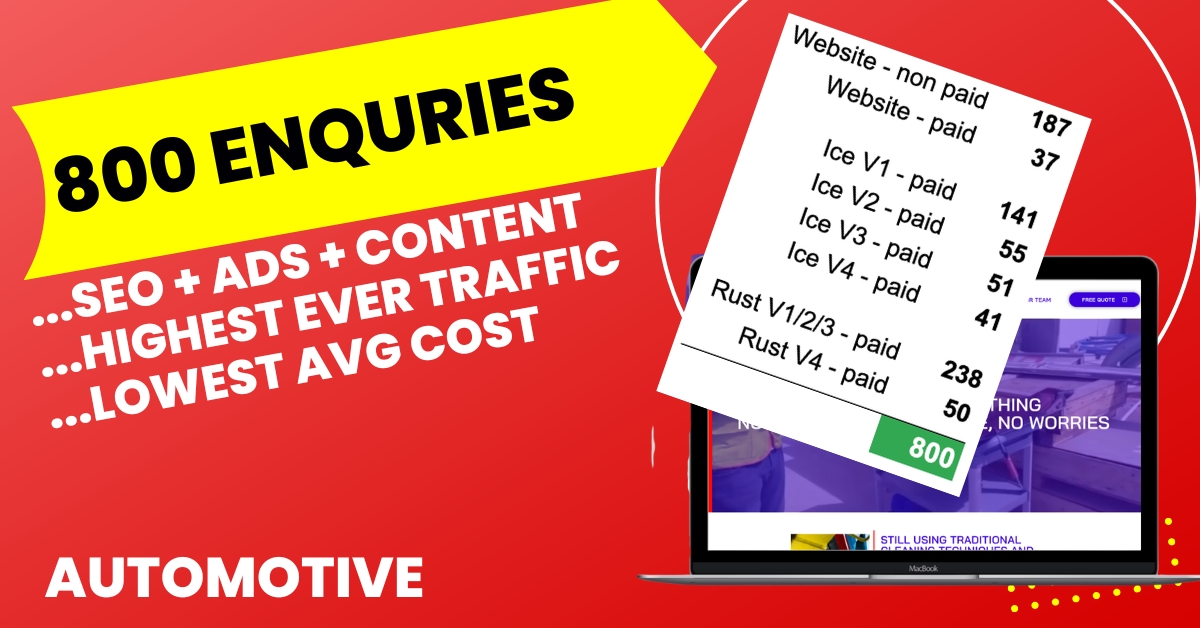
I generated 800 leads for an automotive business with Ads + SEO + Content
Client location: Brookvale, Northern Beaches NSW
- Cost per lead dropped from $86.30 to $6.71 within weeks of me taking over an existing Meta Ad Campaign, a 92% reduction
- I generated 800 leads in 123 days across website, SEO, Facebook/Instagram and Google paid advertising combined for a $2,000+ automotive service
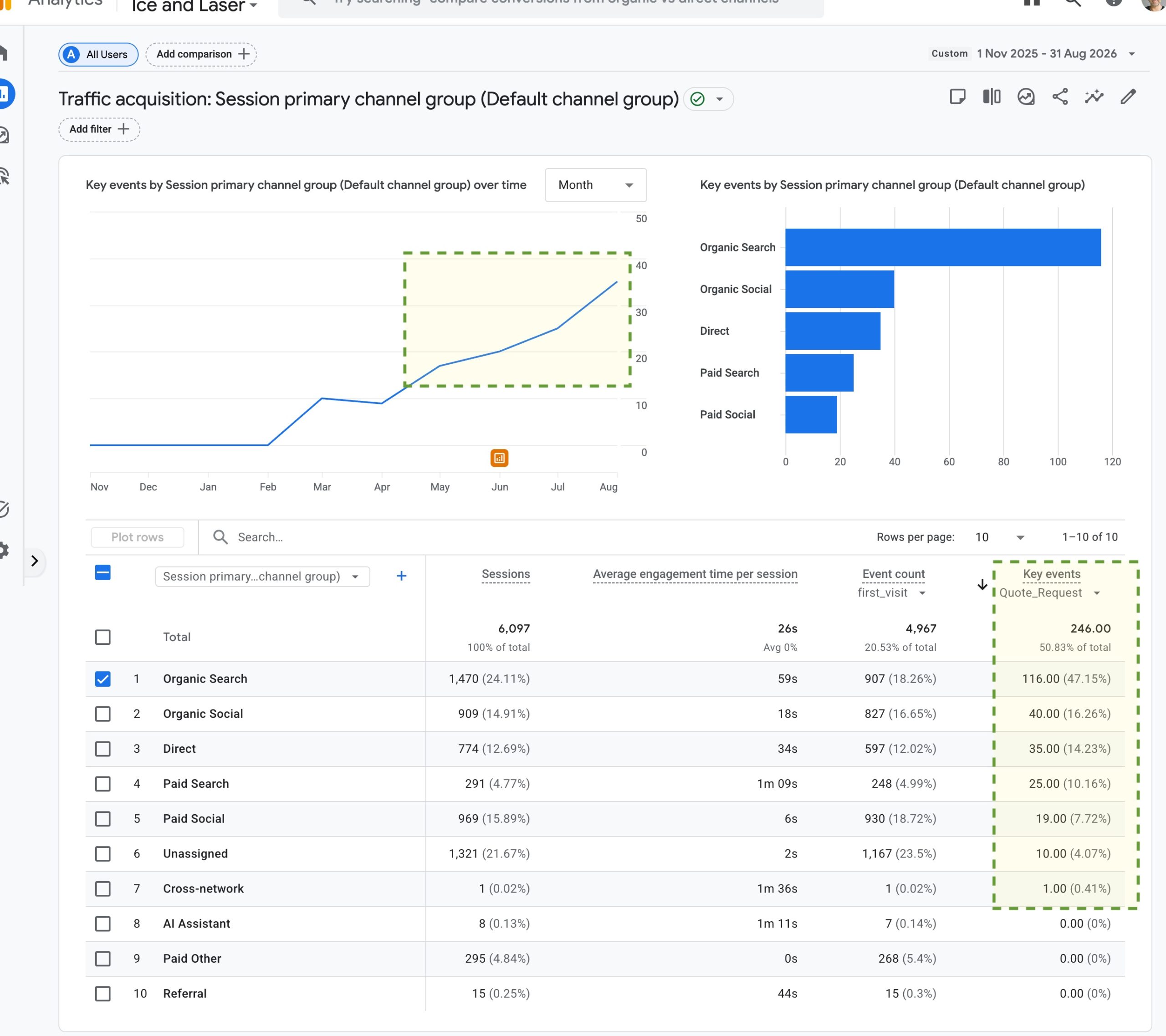
- The SEO & new website content creation I executed has delivered the highest volume of organic website traffic since launch and its the single best-converting traffic source on the site
- Ad budget has since been halved, not because it stopped working, but because the business couldn’t handle any more bookings
- A previous “social media specialist” hadn’t even set up conversion tracking correctly, meaning the ‘specialist’ and business owners had no way of knowing whether their own ad spend was working at all
I built this automotive service business’s website to help launch it and their average job value is over $2,000 per booking depending on the vehicle and options chosen. At first it was set up with basic SEO in place with baseline service pages but no additional content creation in terms of case studies, educational information or industry pieces was part of the scope as it was a start up.
I showed the owners a few examples of how content can help to convert visitors into leads like this B2B lead generation case study for bus shelters.
A few months later I added;
– a new dedicated service page for their primary service of dry ice cleaning.
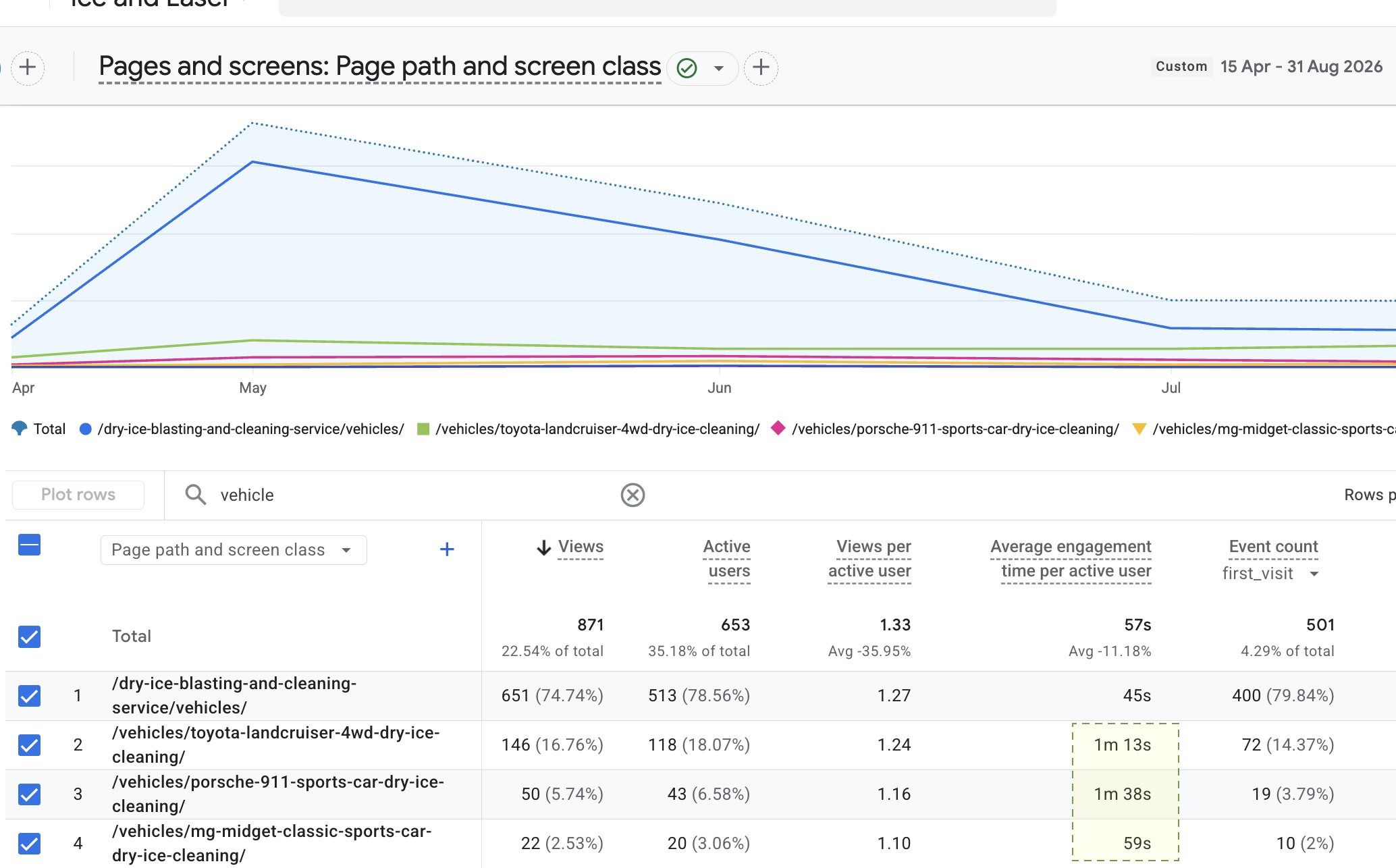
– three real job examples in the form of case studies which featured different vehicle types which aligned with their business goals.
The purpose of doing this was a) to help with conversions of existing visitors enquiring & improve organic search visibility.
So the dedicated service page sat alongside the more generic service information and wording across the site was also updated based directly on what Google Search Console data was actually showing from their previous months history.
In other words there was no guesswork, as a marketing consultant I listened to their needs, understood their ideal client and used data directly provided from Google’s own information to make changes that would grow traffic volumes and leads. It is also further proof that a business can use multiple channels at the same time to generate exposure, in this case website content creation with paid ads on Facebook, Instagram and Google.
What did the owners try & do before I was engaged?
The business owners decided to dabble with ‘Boosting’ posts on their Facebook & Instagram profiles which I had advised was a waste of time in comparison to other marketing tactics. In any case they tried it & while there were thousands of views of their content it didn’t translate into leads.
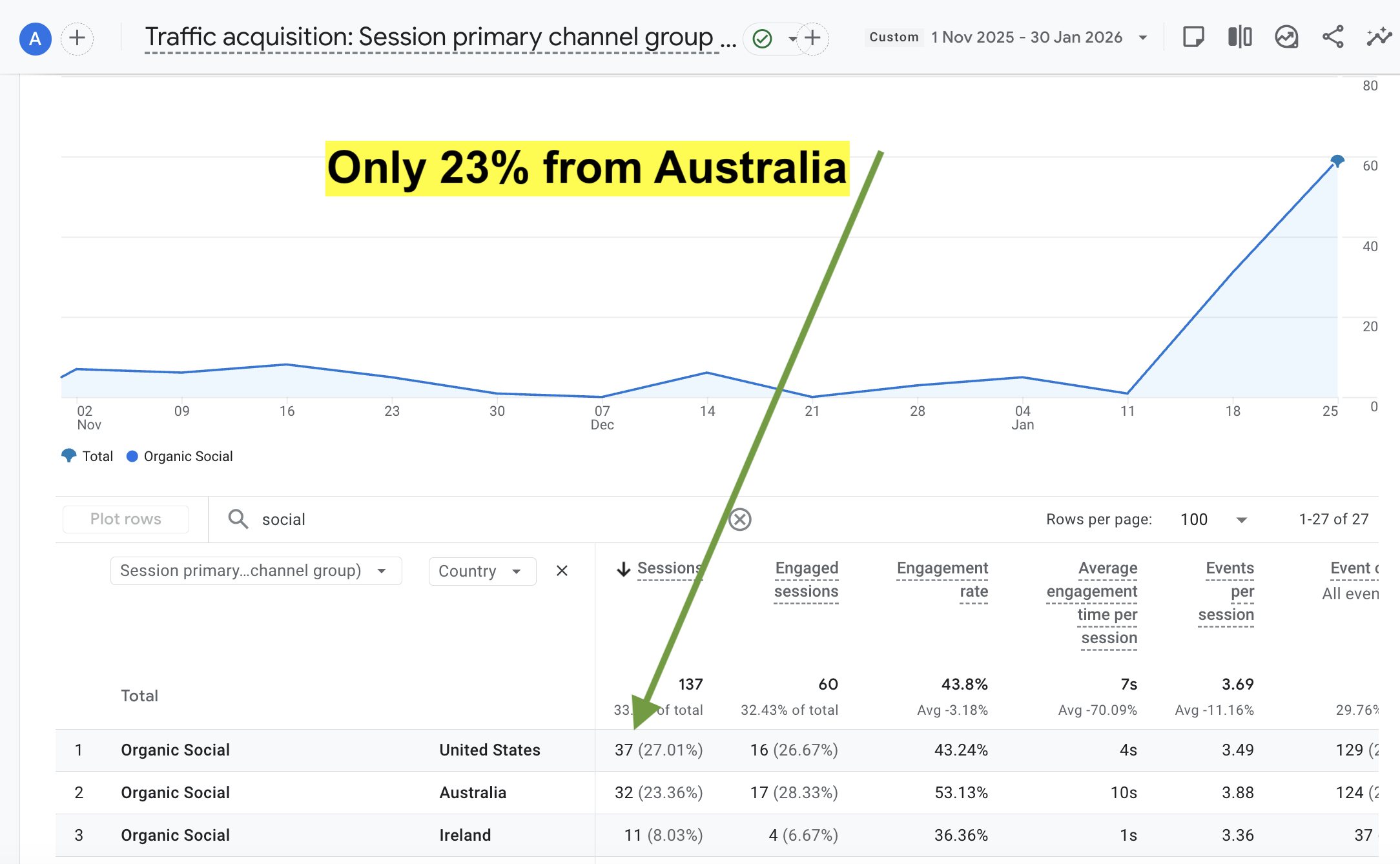
In fact I conducted a mini digital audit and showed them that just 23% of the traffic generated from their social media activity to their website was from Australia.
So they were getting exposure to people who could never use their service or probably not a potential client.
I see business owners wasting a lot of money chasing ‘silver bullets’ when it comes to marketing. Just recently another client attempted to ‘boost’ social media posts as well.
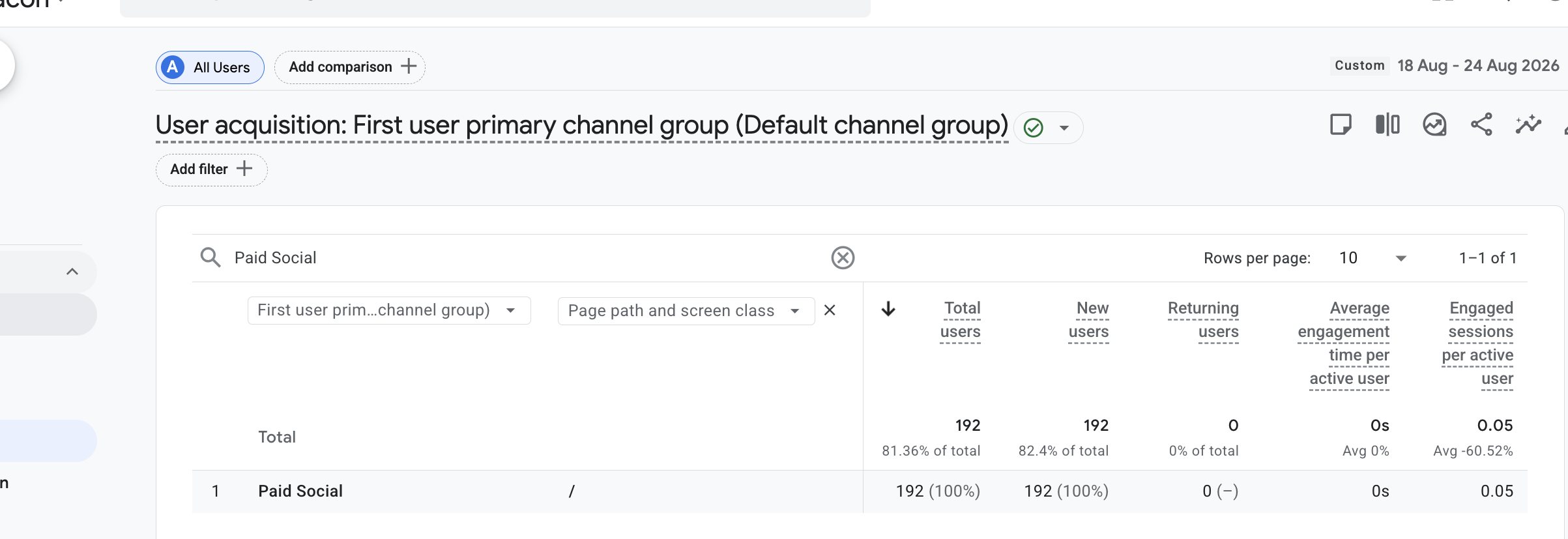
Traffic was registered as a website visit so they may have got excited seeing that in their Meta Insights data, but, what they couldn’t see is that all of those visits registered an average engagement time of less than 1 second.
So I don’t even know if it was real traffic and to make matters worse they just landed on the home page no other pages across the website were viewed.
So then in early 2026, the business decided to engage a self proclaimed “social media specialist” to run a paid ad campaign on Meta for Facebook and Instagram.
As part of the process that person never set up event or conversion tracking correctly on the website, meaning there was no real way to know whether the campaign was actually converting. Worst still was the fact that Meta was highlighting this error in the campaign set up, so they were ignoring direct advice. I’d already set up form tracking independently, so I could see exactly where leads were coming from regardless.
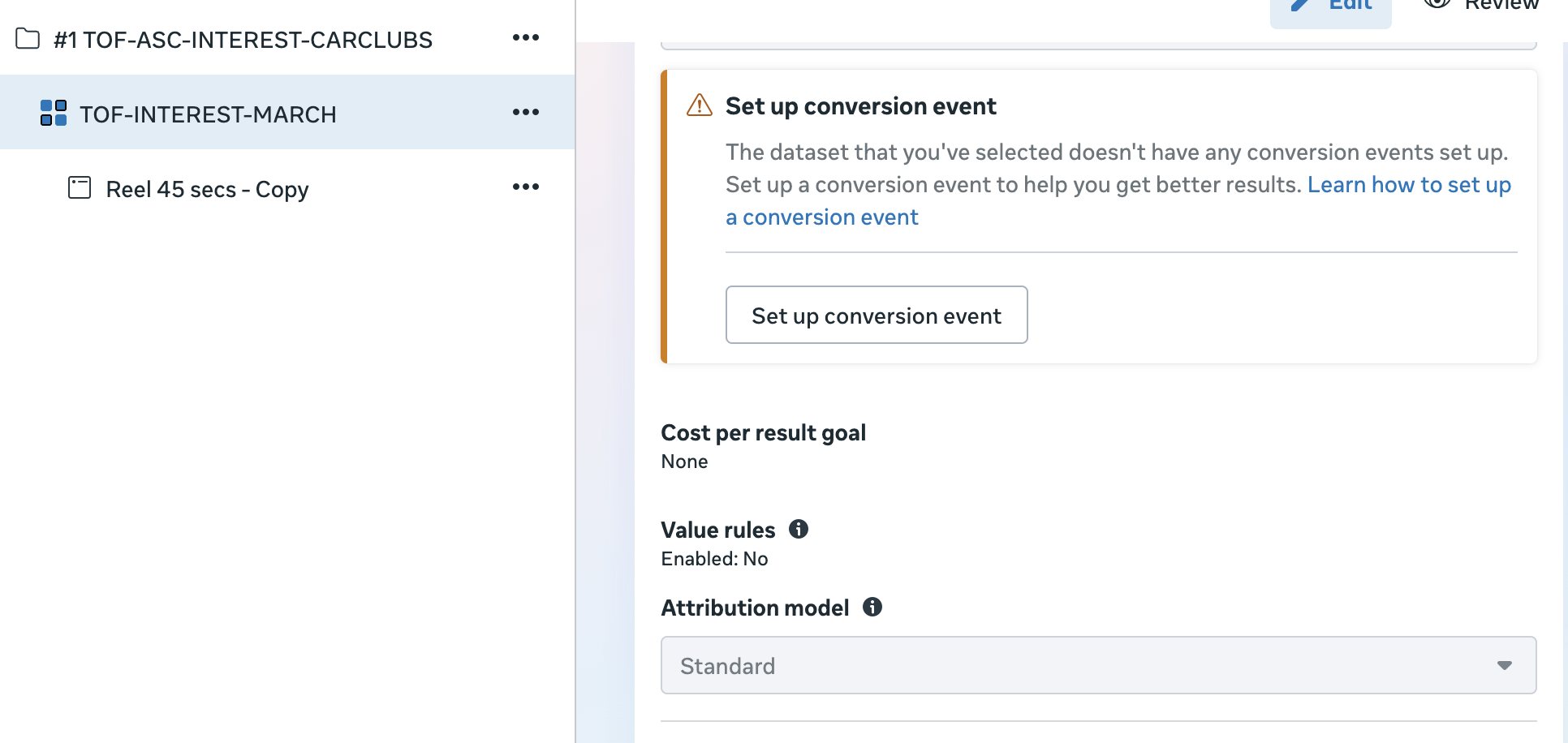
I flagged what I could was seeing directly with my client;
- A single ad creative was running that had no variations and no testing.
- A piece of created that looked more like a music video than something that was selling a service.
- There was no conversion tracking in place
- A very small volume of leads
- Meanwhile organic traffic to the website was generating more leads in comparison.
No surprises there were very few Paid Ad leads being generated because of the poor execution.
The business eventually ended the engagement with the specialist and decided to engage me for their Meta Ad management instead.
The direct comparison
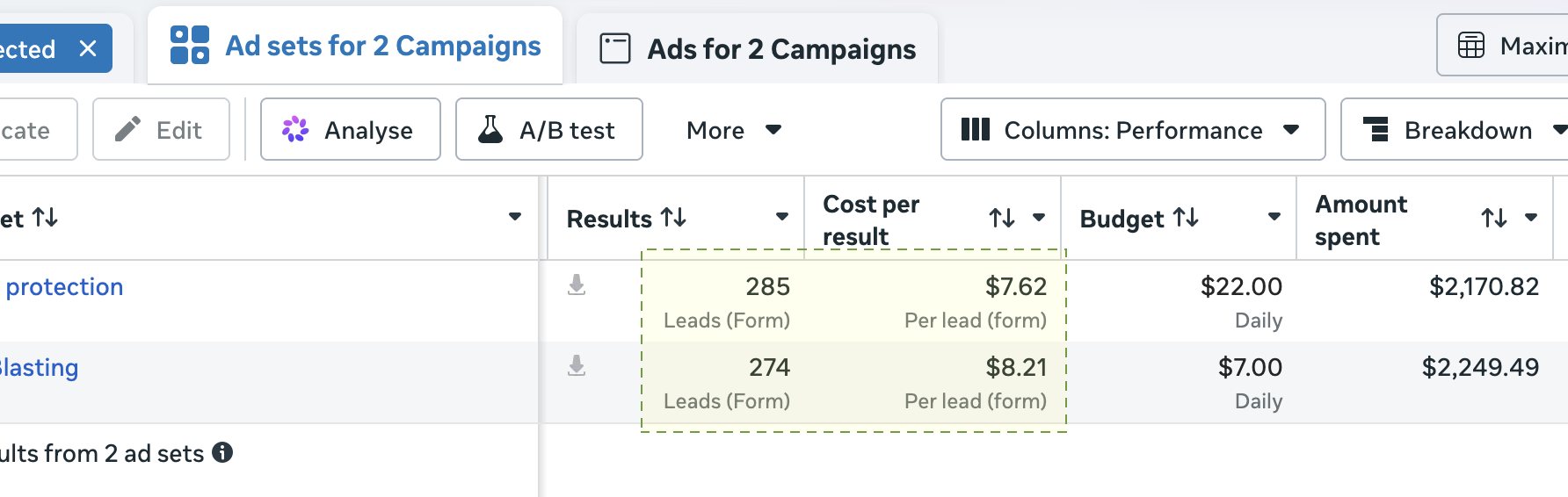
In 45 days – The specialist’s campaign generated 13 leads from $1,222 spent, a cost per lead of $86.30.
In the first 16 days – of the campaign I built, using a range of creative to actually test and learn from, the same budget approach generated 97 leads from $651 spent, a cost per lead of $6.71.
How did I achieve this?
- I designed lots of different creatives to test and try within the Meta Ad Campaign.
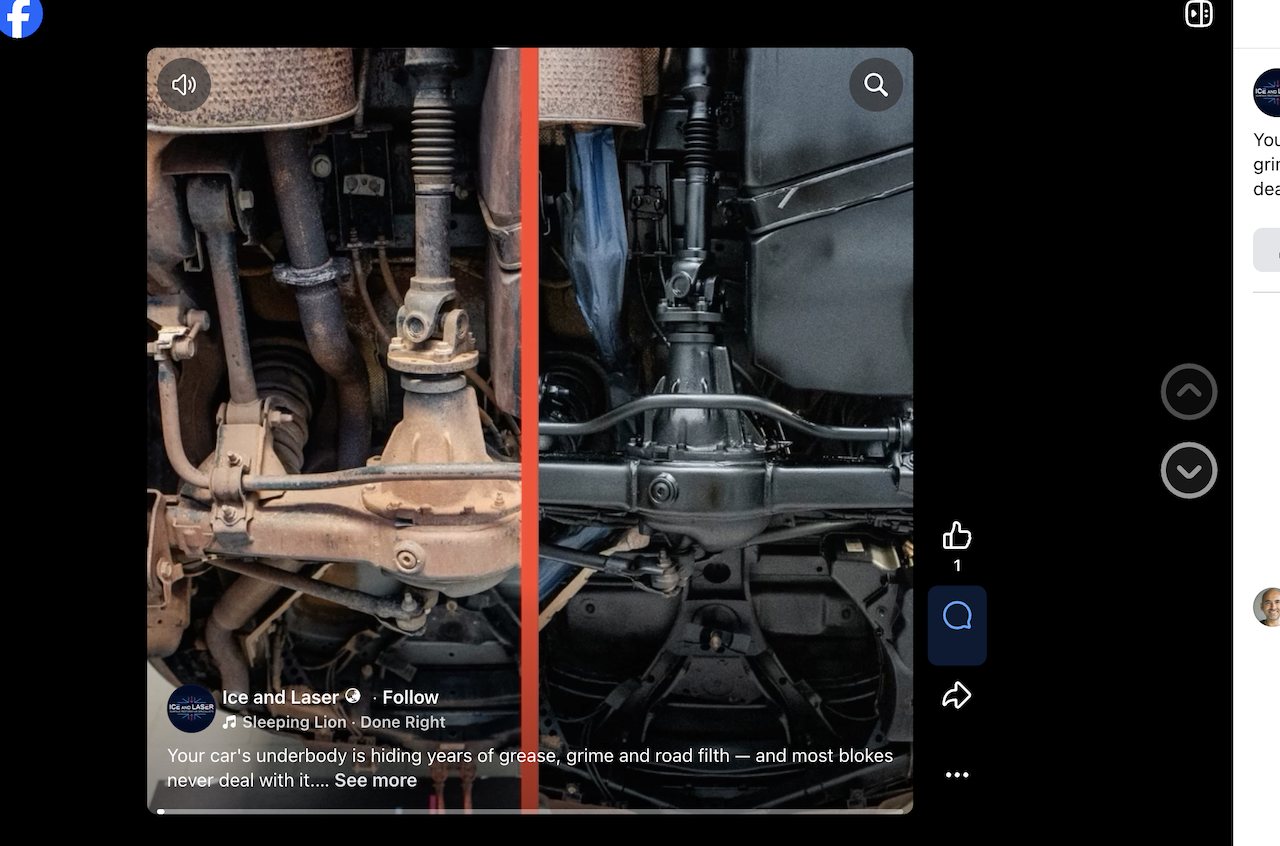
- Each creative was very simple using existing images the business had used on their social media, it was very direct, to the point & a simple visual to understand the before/after potential of the service.
- I changed the customer profiling that was being targeted. For example 18 year olds were included but this is a service that costs $2,000 or more to have done, so most likely out of the budget range for most teenagers with their first or second car.
- I narrowed the locations the ads were being shown in because the service was not mobile you had to visit its location.
- I made the wording in the text placements more direct, simpler & to the point.
- I changed the lead capture mechanism from sending people to the business website & instead keept them on Meta using the built in form capture mechanism it provides.
What's happened since
Meta Paid Ads
The campaign has continued running on Meta, with ongoing adjustments to wording and to the lead forms themselves, adding more qualifying questions to better pre-qualify enquiries and deter people who were just browsing for pricing. That’s genuinely dropped the raw number of leads coming through per week, but improved the quality of each one, a deliberate trade-off, not a decline.
The budget has also been halved in recent weeks, not because performance dropped, but because the business had more bookings and enquiries than it could physically handle.
Google Search Ads
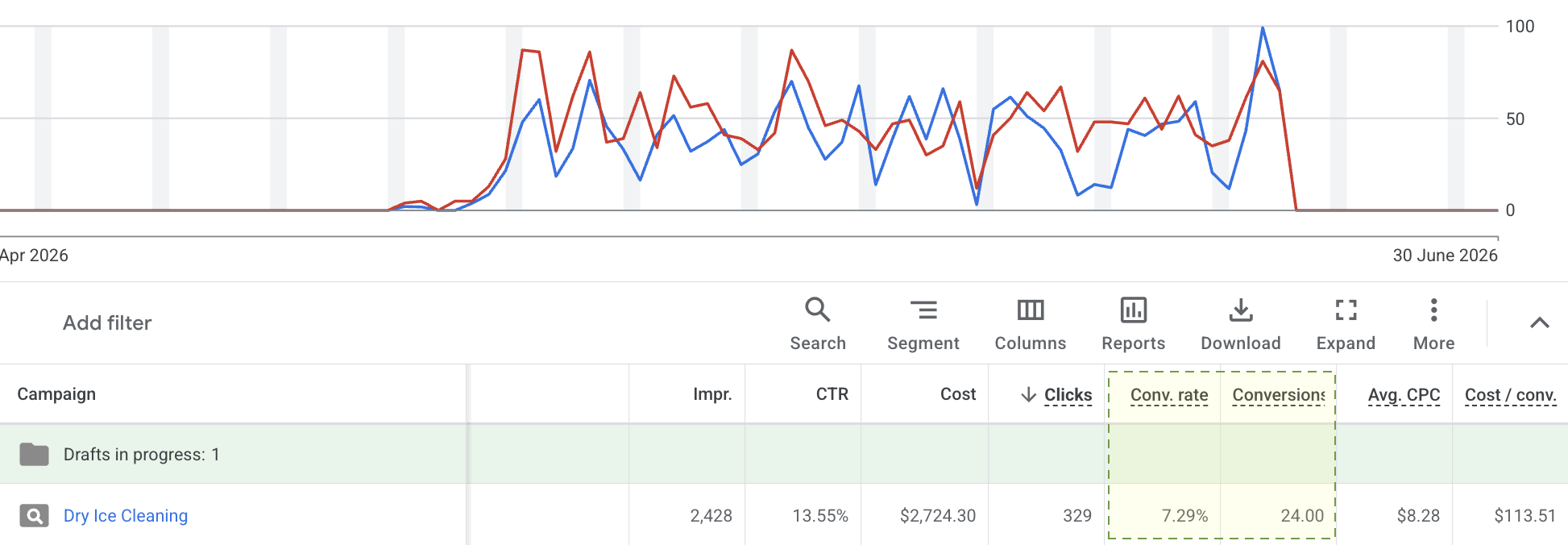
We also tested Google Search Ads alongside Meta to do a comparison on effectiveness and costs. We spent approximately $2,700 which included a $600 credit from Google. Average cost per click averaged $8 with a cost per conversion sitting at about $113 which was deemed to be too high in comparison to Meta.
Although, the missing piece to the puzzle was the lack of clarity around which leads converted to an actual job booking. So even though Google may have been costing over $100 versus Meta at around $11 there was no tracking of which people turned into a booking.
It is quite possible the quality of lead from Google was better than Meta even at the higher cost, but there is no way to know unless the business tracks each lead from its source.
Organic search
As of 1 September, the website has recorded its highest-ever volume of organic traffic since launch, just shy of 1,500 sessions, and organic search is now the single best-converting traffic source on the entire site. This was achieved with the combination of dedicated service page and the supporting content pages.
Overall
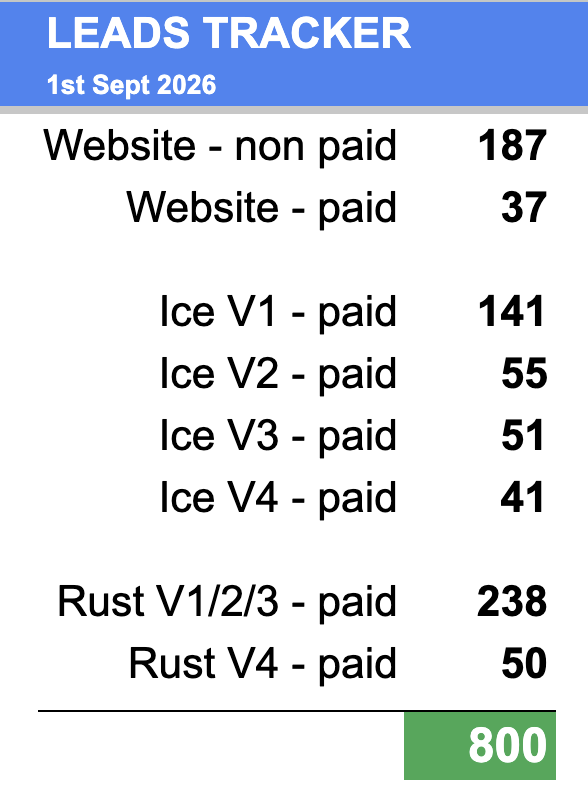
The full picture across 123 days of my full marketing management, website design, SEO, new content, Meta and Google paid ads, and ongoing data analysis:
- 187 lead forms from non-paid website sources, 37 lead forms from paid website sources
- 576 leads captured directly through Meta’s own lead ad forms.
All up, 800 leads in 123 days, with paid leads across both platforms averaging $11.60 each.
What potential does this automotive business have to get more leads?
I’ve recommended several things the business hasn’t acted on yet, not out of hesitation, but because they’re genuinely too busy handling the volume of work already coming in;
- More case studies and project examples covering different vehicle types or even types of sites they can work on to help both SEO and conversion further
- Fresh creative variations for Meta specifically to avoid the campaign losing performance to ad fatigue.
- Social content explaining directly why this business’s service is different from the alternatives
- Revised service page copy built from everything the last few months of real data has shown.
The business is now exploring a second brand entirely, built around a single service type after securing a second physical location. A genuinely good problem to have and proof of how much room for growth is still sitting there even from an already strong position.
If your paid ads aren’t being properly tracked, tested, or managed, get in touch and I’ll show you the real numbers behind what’s actually happening.