
how to Check the credentials of a marketing agency or contractor
- People are typing very descriptive sentences into Ai search tools asking for an honest review of specific Australian marketing agencies, which tells you how thin the independent information is.
- Google’s own hiring guidance says nobody can guarantee a number one ranking, and that you stay responsible for whatever an agency does to your site.
- Three checks cost nothing and take about an hour between them.
- A proposal that will not name what gets done, by whom, and how it will be measured is not a proposal.
- Australian Consumer Law covers marketing services the same way it covers anything else you buy.
- The strongest signal is not what they promise, it is whether they can explain what is wrong with your marketing right now.
- Many agencies have a stylish website that uses stock library photos to make it look like they are a large firm, but they are in fact not.
- Some contractors will claim to be a specialist or experienced but their LinkedIn profiles or actual work history indicates otherwise.
Why I am writing this now
I know from my own experiences in the last ten years through clients who have engaged me as a marketing consultant they experience lots of issues trusting the agency or the contractor they are using. I am not perfect and for different reasons some of my projects didn’t work as expected, but more often than not it was high expectations from a client not willing to put the work in to achieve the result.
What supported my own observations was what I saw when I pulled 16 months of search data for my own site and found quite a few phrases that surprised me.
People are searching in full sentences for honest reviews of named Australian marketing and SEO agencies. Not “best SEO agency Sydney”. Actual sentences asking for a candid assessment of a specific company in an attempt to try and uncover some honest truth about who they are.
That is a business owner with a proposal in front of them, a bad feeling and nowhere neutral to go. Whenever I have carried out a digital audit for a client I always go and look at the agency or contractor that did the work. More often than not they have hardly any reviews or the ones they do have seem to feel like they were written by staff or from a directory that charges for review placement.
So here is the explanation I give people when they enage me to audit a proposal they have been sent.
None of it requires you to know anything technical.
Start with what Google itself says
The most useful document on this subject is published by Google, is free, and almost nobody reads it. It exists specifically for business owners deciding whether to hire an SEO resource to help with their marketing.
1. It states directly that nobody can guarantee a number one ranking, and to be wary of anyone who claims to guarantee rankings, claims a special relationship with Google, or offers a priority submission. It says to be careful if a company is secretive or will not clearly explain what it intends to do. Plus it makes the point most people miss: you remain responsible for the actions of any company you hire. If they do something that gets your site removed from Google, that is your problem, not theirs.
Source: Google Search Central, “Do you need an SEO?“
2. In June 2026 Google added a companion page on third-party SEO tools, services and advice, including how to evaluate claims about AI search visibility. It also makes clear that no third-party tool has access to Google’s internal ranking systems, which is worth remembering next time someone shows you a proprietary score in a pitch deck or some form of graphic or chart showing that type of data. Not even Google’s on tool, Google Search Console, (as of August 2026) shows rankings or positions from Ai derived searches.
Source: Google Search Central, “Google Search’s guidance on using third-party SEO tools, services, and advice“, updated June 2026
If a proposal in front of you contradicts either of those pages, you have your answer without needing a second opinion. The agency or contractor is sharing information that is probably fabricated. The other reason a guarantee is worth nothing: an agency can rank you at number one for a phrase nobody searches.
I have shown exactly what that looks like in practice in why a number one ranking on Google does not always mean anything.
The four checks worth doing yourself
Check one: do your own research.
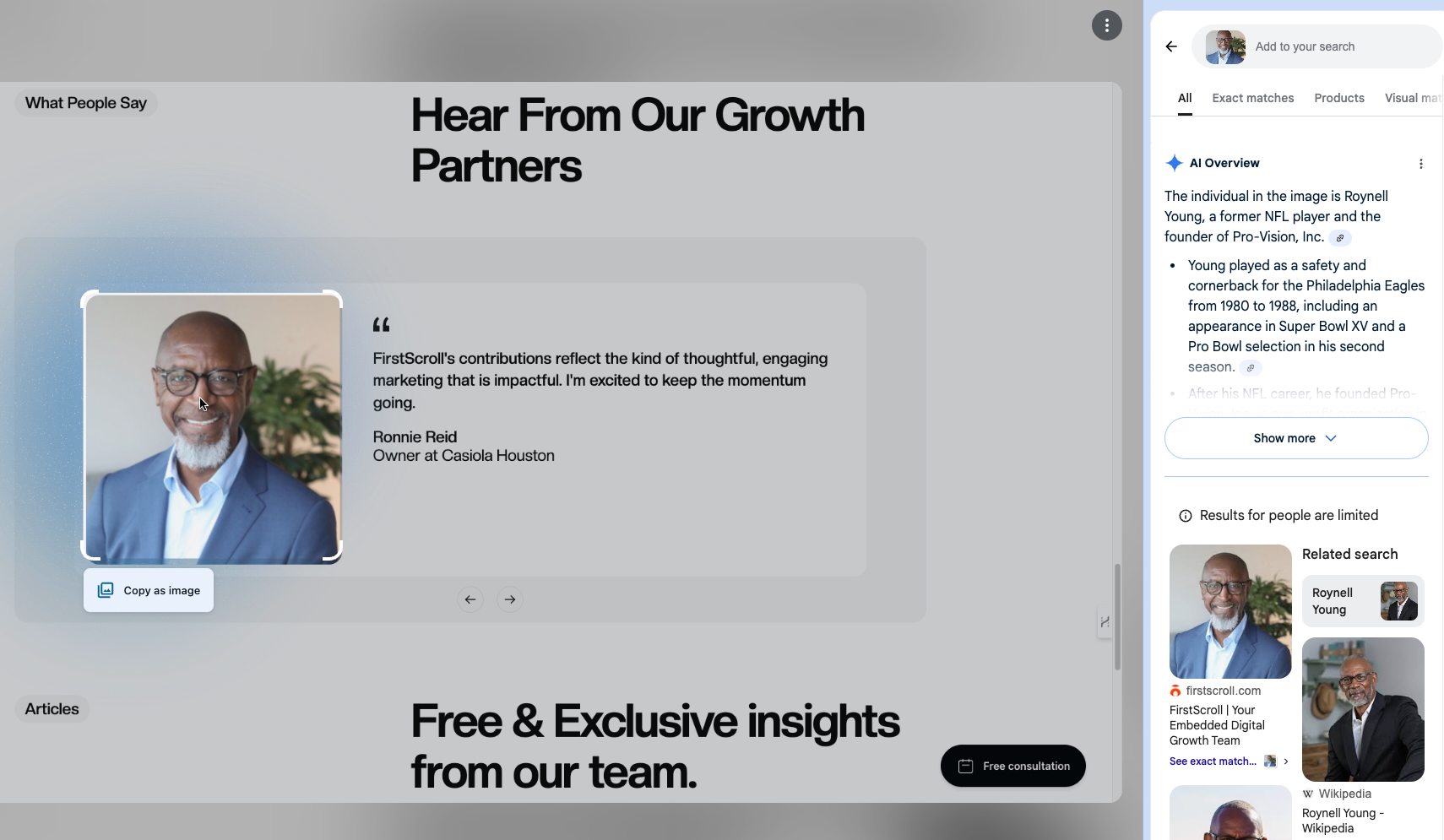
- Using Google Lens take a page or pages of a marketing agency or contractor’s website and see if any of the images of staff, offices or even reviews/testimonials are stock library images. If they are then you know they are fabricating information.
- Go to LinkedIn and try and find the company profile & then the employees. See if any of them have extensive experience in the field or for the skills they say they have. See if any LinkedIn posts can demonstrate real expertise or do they just constantly talk about theory?
- If they show case studies do they have very simple descriptions with screenshots that don’t show a lot of detail or are they extensive examples?
Check two: who will actually do the work.
Ask for the name of the person doing your work, their role, and how many other accounts they carry. Then look them up. This is the most common gap between what gets pitched and what gets delivered, and I have written up the mechanics of it in how marketing agencies bait and switch clients.
A good answer names a person. A bad answer names a team, a process, or a methodology.
Check three: make them show a real before and after on a real business.
Not a logo wall. Not a testimonial. A named business, a starting position, an ending position, a time frame, and a commercial outcome. Then go and look at that business’s website yourself.
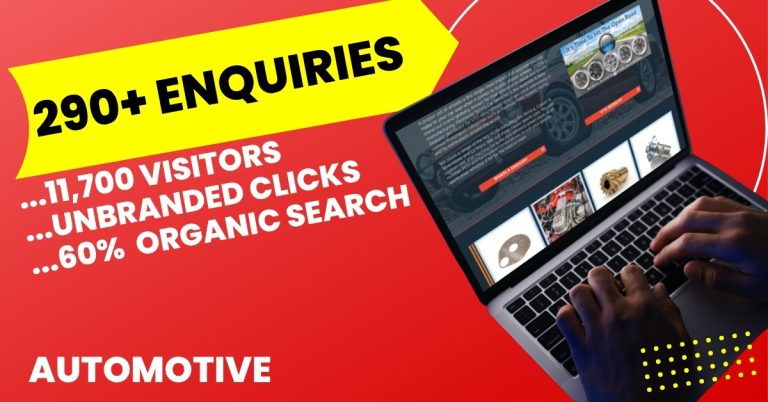
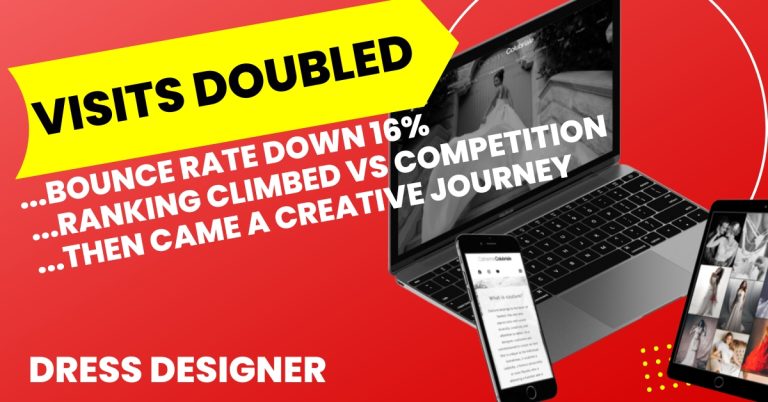
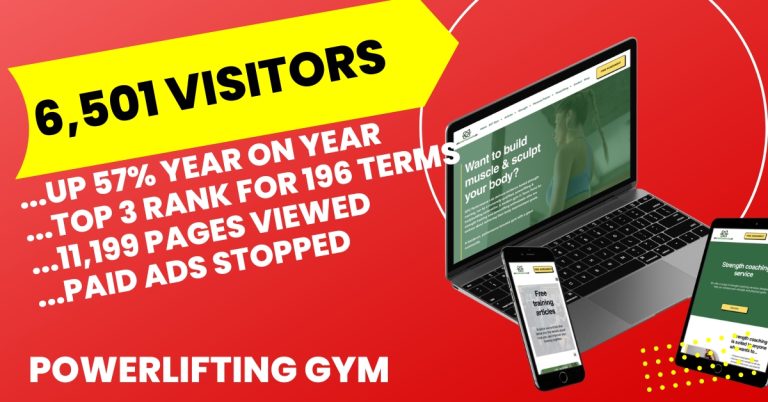
You are checking one thing: does the work described actually appear on the site? This is the standard I hold my own work to, which is why every case study I publish names the business, shows the real data and includes the parts that did not go to plan. Two of them are about work that plateaued or got undone afterwards. Ask an agency for the same and see what comes back.
Check four: ask what happens to the work if you leave.
Who owns the website, the domain, the ad accounts, the analytics property, the content? The correct answer is you, in every case. If any part of that answer is “we host that for you” or “that sits in our account”, you are not buying marketing, you are renting your own business back.
This is the question that produces the most revealing silence. It is also the question that made a Sensis product I reviewed years ago look very different once I read the terms properly, which you can see in my review of the Sensis Yellow SEM 3000 service.
Answers that should worry you
Six things agencies or marketing contractors say in a pitch and what each one usually means in practice.
| What they say | What it usually means |
|---|---|
We guarantee page one | Either for phrases nobody searches, or via paid ads presented as rankings. Google says outright that nobody can guarantee rankings. |
We have a proprietary algorithm score | No third party has access to Google's ranking systems. This is a marketing device. |
We can't share our methodology, it's our IP | Google's own guidance flags secrecy as a warning sign. |
It takes 12 months before you'll see anything | Sometimes true for organic search. Never true for having nothing to show you at month three. |
Everyone needs to be on every platform | Nobody has assessed your business. |
We'll take care of all of it, don't worry about it | The most expensive sentence in marketing. |
The last one deserves its own time for some thought. Business owners who are busy and out of their depth are relieved to hear it, and that relief is the product being sold. I watched an agency work a version of this scenario & you can see what happened here; live review of an SEO agency trying to trick a business owner.
If you have a proposal in front of you right now and want somebody outside the deal to read it properly, that is what a one hour marketing consultation is for.
Fixed price, one call, and you keep the notes whether or not you go ahead with the agency.
Get the commercial terms in writing before the marketing terms
Three things belong in the contract, and their absence tells you more than anything in the pitch.
The notice period.
Twelve month lock-ins with no exit are common and rarely justified. A three month initial term rolling monthly afterwards is a reasonable structure and a confident one.
What is actually delivered each month.
Not “SEO”. A list. Four pages rewritten, one technical fix, one report, one call. If the deliverable cannot be described as things that will exist by the end of the month, nobody can tell whether you got it.
Who you call when it goes wrong, and how fast they answer.
Marketing services are covered by Australian Consumer Law like any other service. Services must be provided with due care and skill and must match what was advertised or described. If an agency told you something specific about what they would achieve, and that formed part of why you signed, it matters.
Source: ACCC, consumer guarantees on services.
The ACCC also reports that false billing remains one of the largest categories of loss for Australian small business, most often through invoices for directory listings and advertising services that were never ordered. If an invoice arrives for a listing or optimisation service you do not remember agreeing to, do not pay it before checking. The inbox version of this is covered in why you keep getting emails offering website help.
Source: ACCC Targeting Scams reports, National Anti-Scam Centre.
The test that beats all of the above
Ask them to explain, in plain English, what is currently wrong with your marketing and why.
Not what they would do, what is wrong now but without them referring to an automated online report.
Someone who has actually looked will tell you something specific and slightly uncomfortable like;
- Your service pages do not say what you charge.
- Your enquiry form asks for eleven fields.
- Your best performing page has no way to contact you on it.
- You are bidding on your own brand name for no reason.
- You don’t have a clear point of difference
- Navigation is really poor
- 80% of visitors are on mobile phone but the site is hard to read
- You don’t get any real traffic it is just fake bots from backlinks
Someone who has not looked will talk about growth, visibility, digital transformation and being found by the right customers.
The difference between those two conversations is the whole decision.
You do not need to understand SEO to tell them apart, you only need to notice which one talks more about your business in commercial terms.
That difference is also getting easier to fake which I have written about separately in why faking marketing expertise now costs more than ever.
If you would rather have the answer than the proposal
There is a third option most people do not consider.
Instead of choosing between agencies, buy the diagnosis first and then decide what you actually need.
That is why I offer a full digital marketing audit: a fixed price piece of work with a written report you own, that tells you what is wrong and what it would take to fix, before anyone sells you a service or retainer. You can take that report to an agency, to a freelancer, or to me.
Several clients have used it purely to work out that the proposal on their desk was solving the wrong problem. Many then used me to solve their situation and you can see those case studies here on my website for proof.
I have been doing this on my own since 2015, which is deliberate: there is no junior account manager behind me, so the person who reads your proposal is the person you spoke to. If you want to check that claim the same way I have just told you to check everyone else’s, 100+ reviews from clients and colleagues are here.