Why a "#1 position on Google" doesn't always mean anything
Ranking first on Google feels like proof. It’s specific, it’s checkable, it sounds like exactly the kind of thing worth telling people.
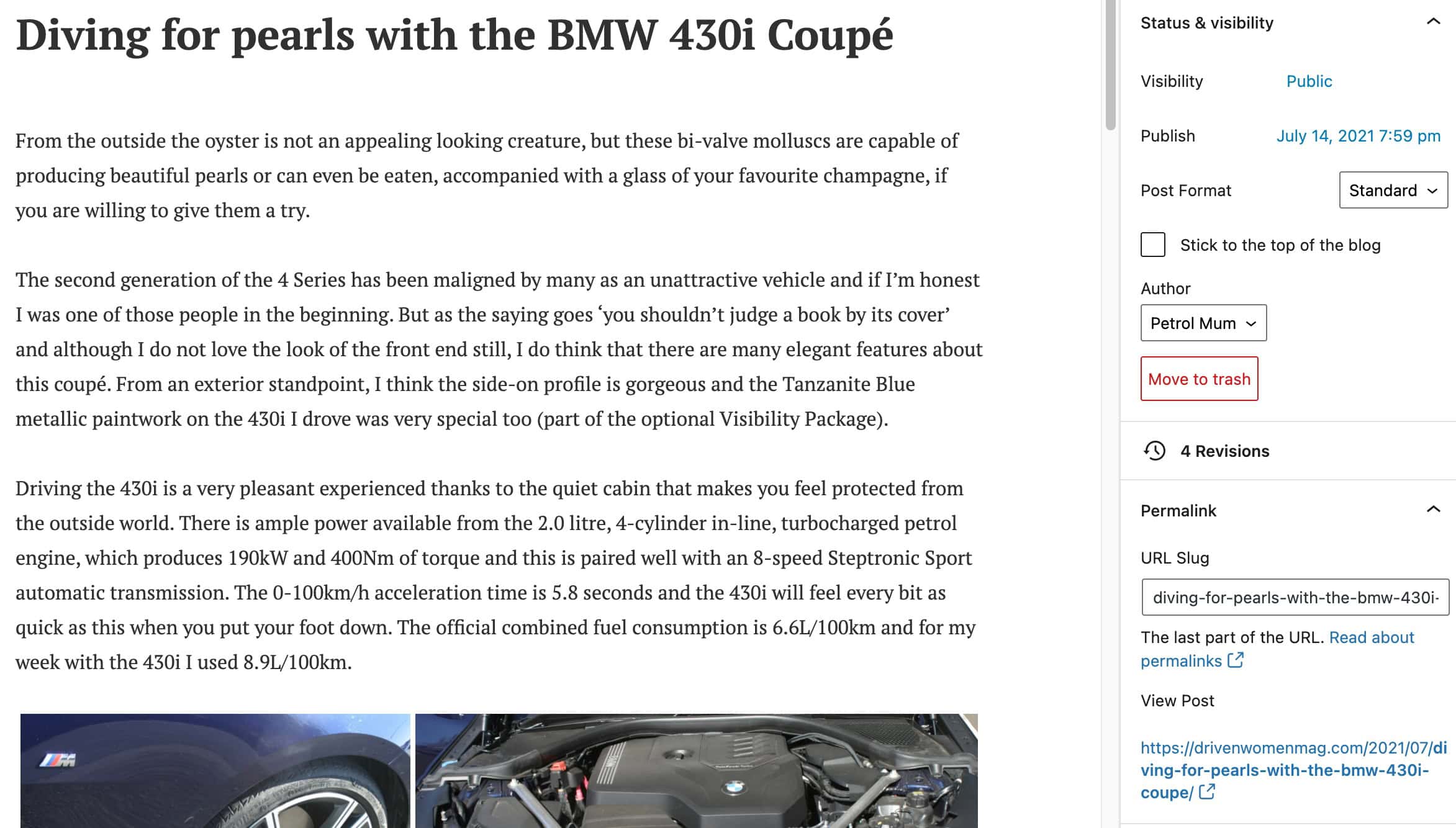
The problem is that “first” only means something if anyone is actually searching for the phrase you’re first for. I audited a niche online publisher in 2021 who kept using a #1 ranking claim in her own marketing for years afterward.
I checked the real numbers behind it recently, just fifteen search impressions were generated recently on Google and one had clicked. Meanwhile in the last 16 months 3,086 search clicks from 17,600 went to a single page of content out of 911 listed pages in the sitemap. In the last 3 months year on year organic search queries have actually grown to 3,910 up from just 3,040.
The website has so much potential, I’m not naming the business, as the lesson here isn’t about them specifically, it’s about a mistake that’s genuinely easy to make with good intentions, how a business owner or other professional can be deceived while not understanding the data can lead to lost opportunities.
What the original audit found
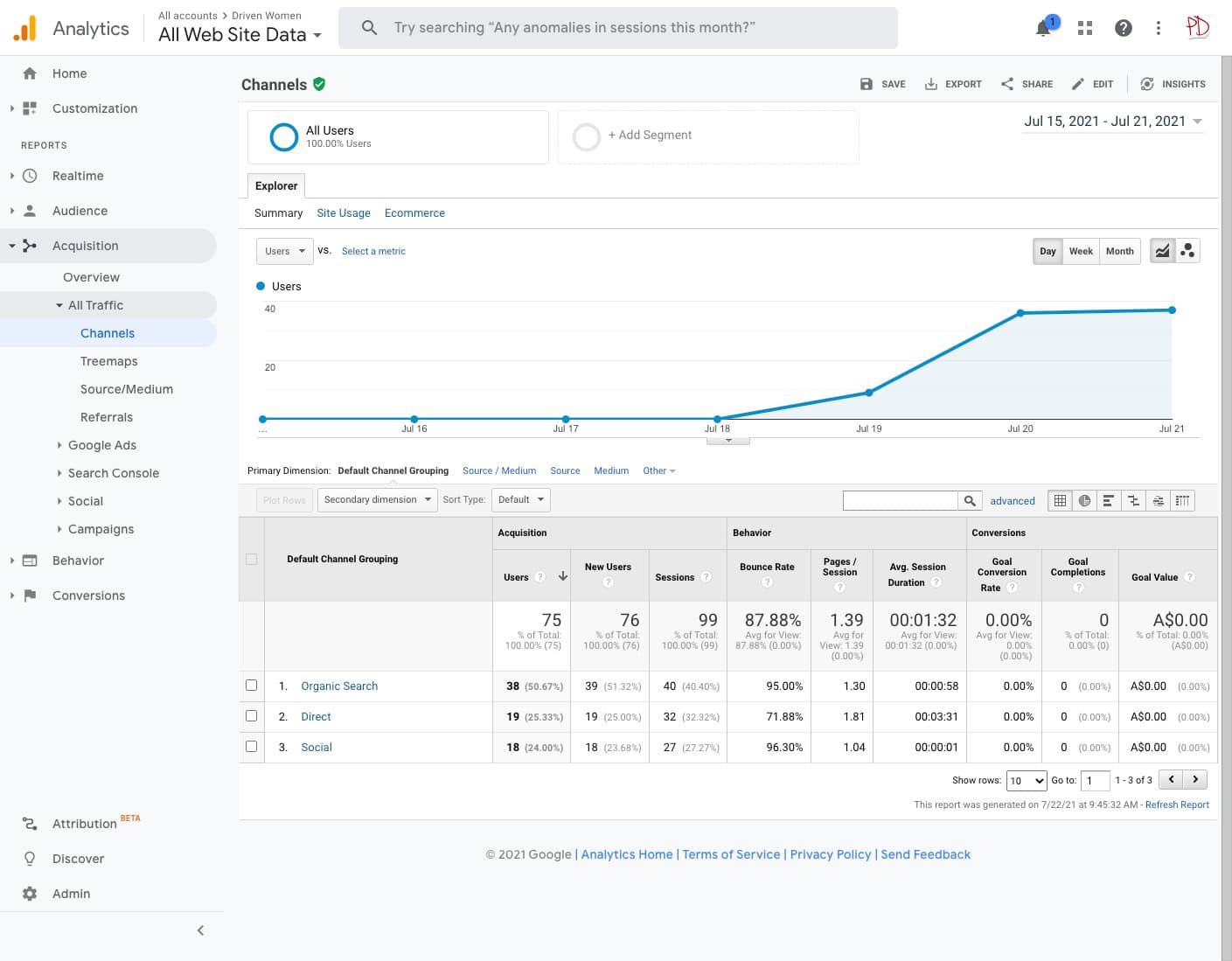
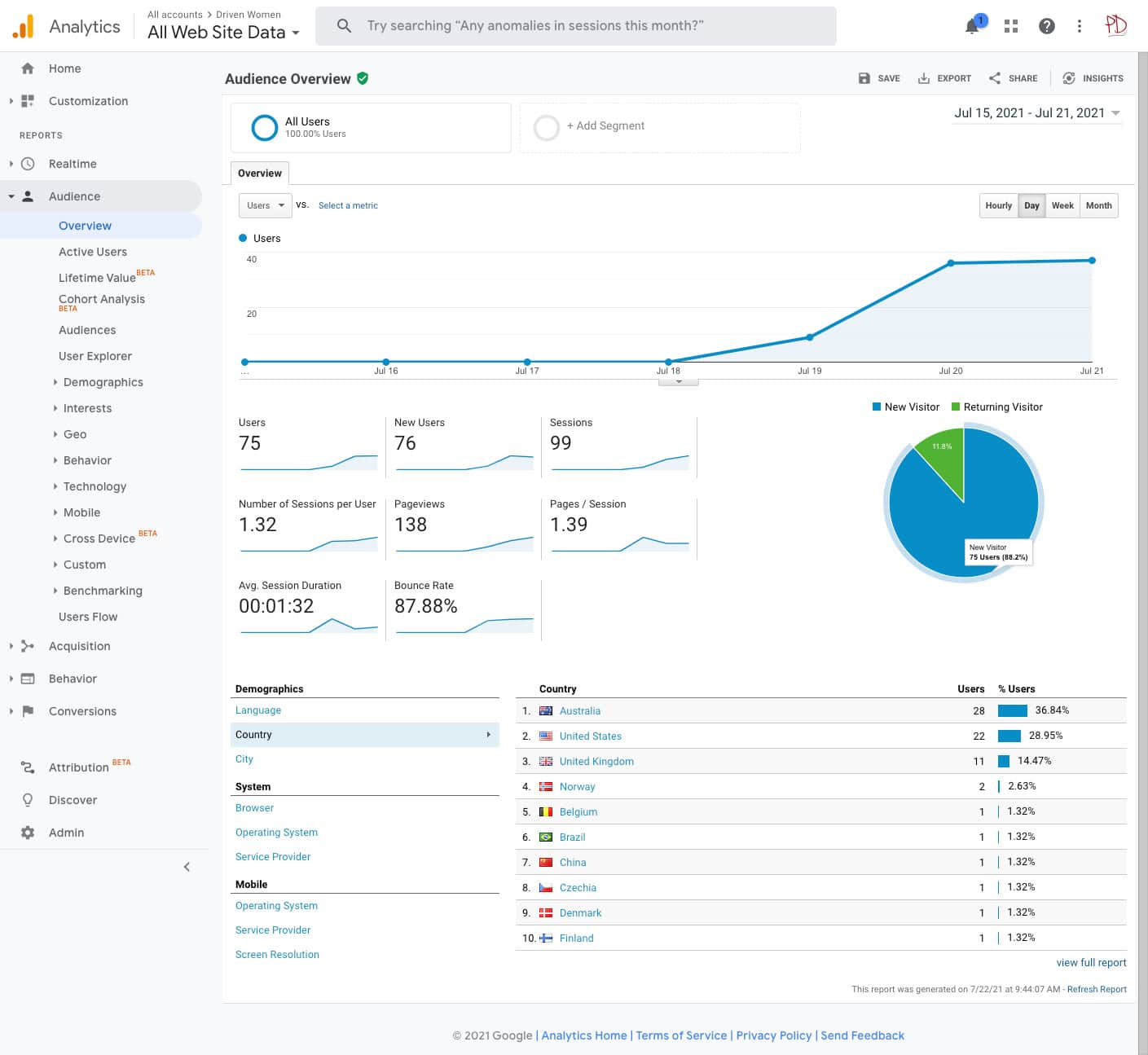
The 2021 audit was a brief one that was commissioned by the owner who was curious about learning how to grow her website visitor volumes for her automotive news website. Part of my scope of work was to set up Google Analytics and Google Search Console for her site so that she could see some of the data first hand.
Some of the other things that my audit discovered were;
- A mobile PageSpeed score of 48 out of 100.
- Missing meta descriptions on the vast majority of pages.
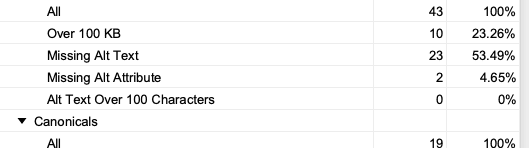
- Missing alt text on more than half the site’s images.
- Naming of pages that were nice for printed editorial but no good for online search visibility.
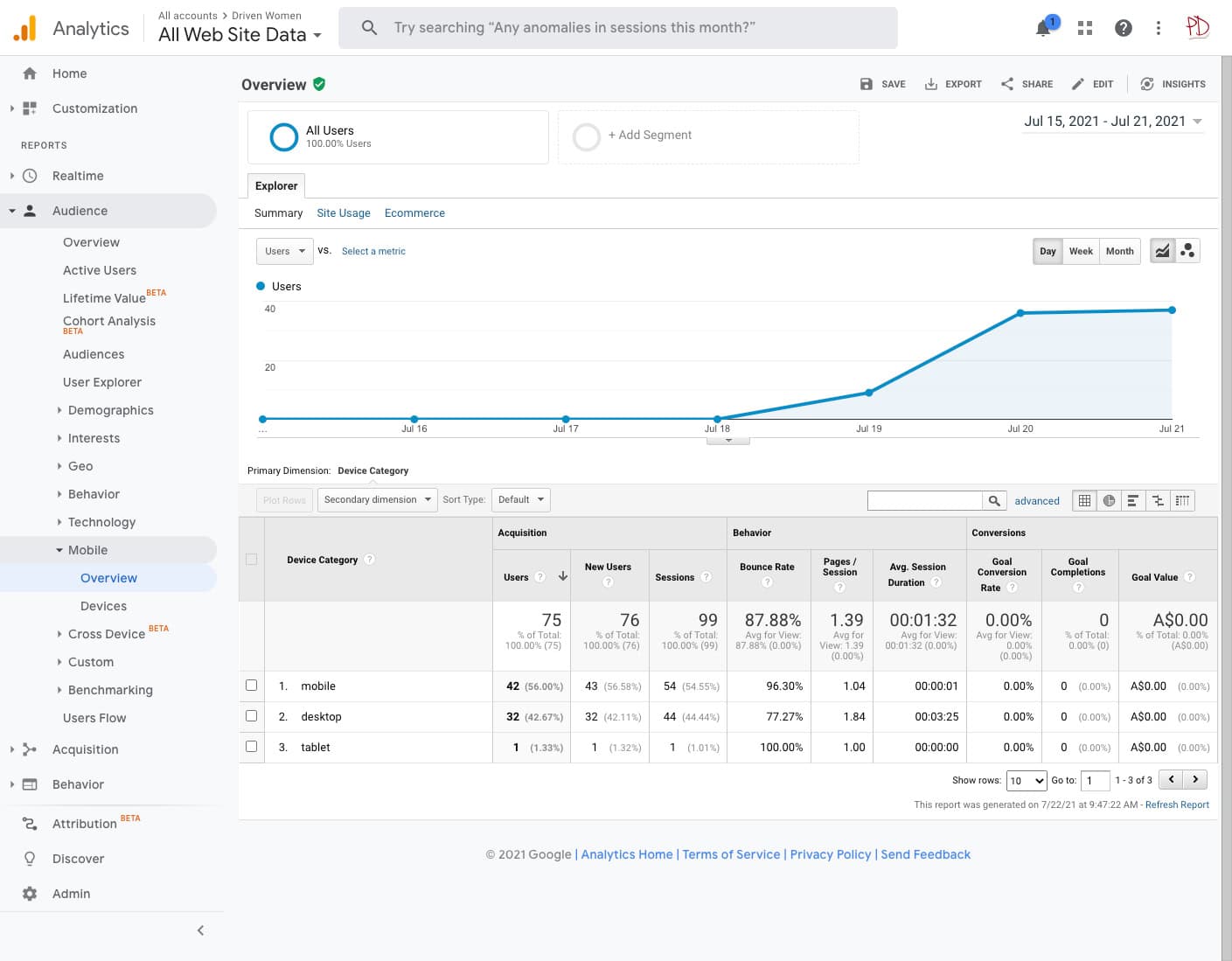
- Analytics data showing visitors from outside Australia behaving like bots, sub-3-second visits, 100% bounce, a strong sign of toxic backlinks or poor hosting rather than real readers.
- Mobile visitors, more than half the site’s traffic, were bouncing at 96%, spending less than a second on the site as well.
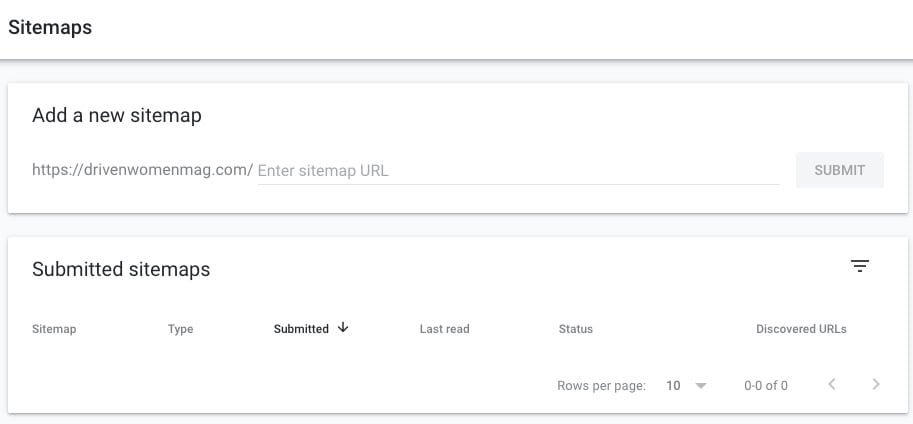
- There wasn’t even a sitemap submitted to Google to be indexed.
The warning attached to that finding was direct: if almost nobody searches the specific phrase you’re ranking first for, being first isn’t actually valuable, and if a potential partner or client checks the real search volume themselves, leaning on that claim publicly could quietly damage credibility rather than build it.
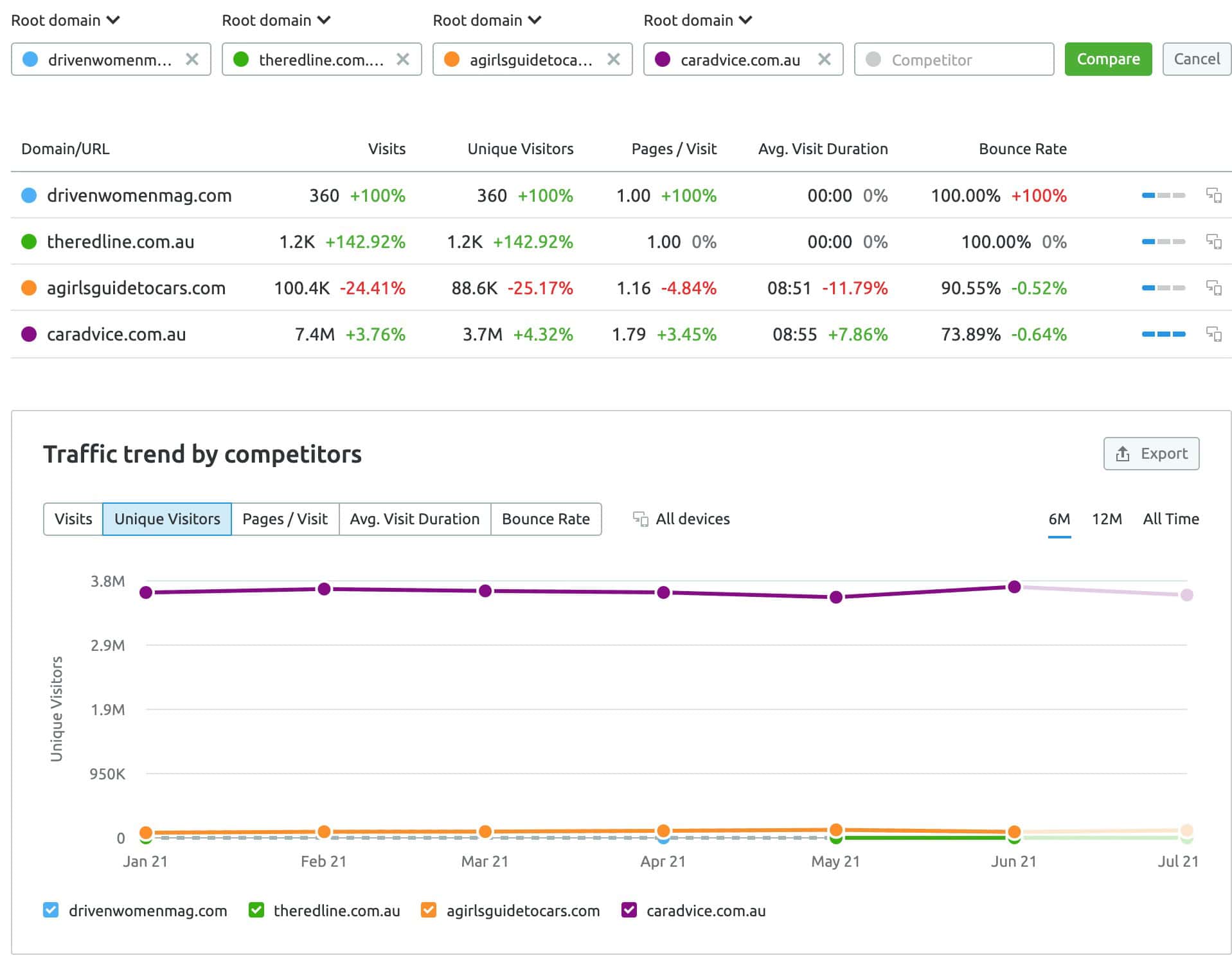
Meanwhile using SEMRush to compare competitors at the time it was obvious this website was missing out on thousands of visitors each month due to the poor execution.
What the real data shows now
Checking again in 2026 using the site’s actual Google Search Console account, not an estimate, the phrase closest to the claim earned just 15 impressions and 1 click over a meaningful recent window, in practical terms it’s invisible online. Across hundreds of related search phrase variations tracked in the account, the overwhelming majority show either zero clicks or single digits, some with real search volume in the thousands and still not a single click recorded for other phrases much more relevant & with search volumes.
I pulled the data with all the phrases including the word ‘woman’ and there were over 50,000 impressions but because the site didn’t rank for any of them there was no traffic. Imagine if just 10% of that was secured.
Here’s the part that makes this a genuinely useful story rather than just a cautionary one: real, meaningful growth was happening at the same time, just not on the phrase being publicly claimed. A broader, genuinely searched phrase tied to the same content grew from 6 clicks to 35 over the same period, year on year, so something worth celebrating maybe.
The business had an actual win available to talk about (and many others due to the great story writing on the website) but it kept reaching for the one that didn’t mean anything instead.
The technical gaps identified in 2021 are generally still visible today too. The site’s current page title, checked directly, runs to more than 200 characters, far past what displays properly in a search result, stuffed with repeated keywords rather than written for a reader.
That’s the same category of basic technical issue flagged five years ago, still unresolved so combined with the lack of content development it is a news website just scratching the surface of potential.
Why the claim keeps working anyway
When I shared this data recently, the response was candid: yes, the number is essentially meaningless, but most of the public relations and marketing contacts who see the claim wouldn’t know that, and to them, it reads as a genuine, significant achievement.
That’s worth contemplating for a second because it’s really a claim about an entire industry’s habits, not just one business’s marketing line. A specific, checkable number has been working as a credibility signal for years, not because it was cleverly disguised, but because almost nobody on the receiving end spent the two minutes it takes to check it. Although not by just searching the phrase, but understanding the real volume behind it.
That’s a real, uncomfortable gap in how PR and marketing professionals actually operate: treating a specific-sounding claim as true because it sounds precise, rather than because anyone verified it.
The responsibility here doesn’t sit only with whoever makes a claim. It sits at least as much with whoever repeats it without checking. If you’re the person deciding whether to run with a “#1 on Google” line in a pitch, a press release, or a client report, that’s exactly the moment to ask the two questions above, not after it’s already been repeated somewhere else as fact.
Or let’s get pragmatic, imagine spending money with an entity claiming something that looks correct but lacks true value.
How to actually check whether a ranking claim means anything
Before repeating any “#1 for X” claim, in your own marketing or anyone else’s:
- Check the real search volume for that exact phrase, using Google’s own Keyword Planner or a tool like SEMrush’s free tier. If barely anyone searches it, being first isn’t a meaningful signal of anything
- Check clicks, not just position. Google Search Console shows both for free. A high position with near-zero clicks means the phrase isn’t actually bringing anyone to the site
- Ask what a real customer would actually type. A ranking win only matters if it’s for language your actual audience uses, not language built specifically to be easy to rank for
This is the same underlying caution behind checking a media kit’s audience claims before trusting them, and checking whether a domain’s “authority score” means what it’s presented to mean. A specific, official-sounding number is persuasive precisely because it sounds checkable. The responsible move, whether you’re the one being pitched or the one doing the pitching, is to actually check it.
If you’ve got a marketing claim you’re not entirely sure holds up under real scrutiny, get in touch and I’ll check the real data with you before anyone else does.
I check whether a number actually means something before it goes anywhere near a client’s marketing, mine included. If you want to know whether your own ranking or traffic claims would hold up, see how I could help.