A Travel agent website with multiple strategies
Client location: Adelaide SA
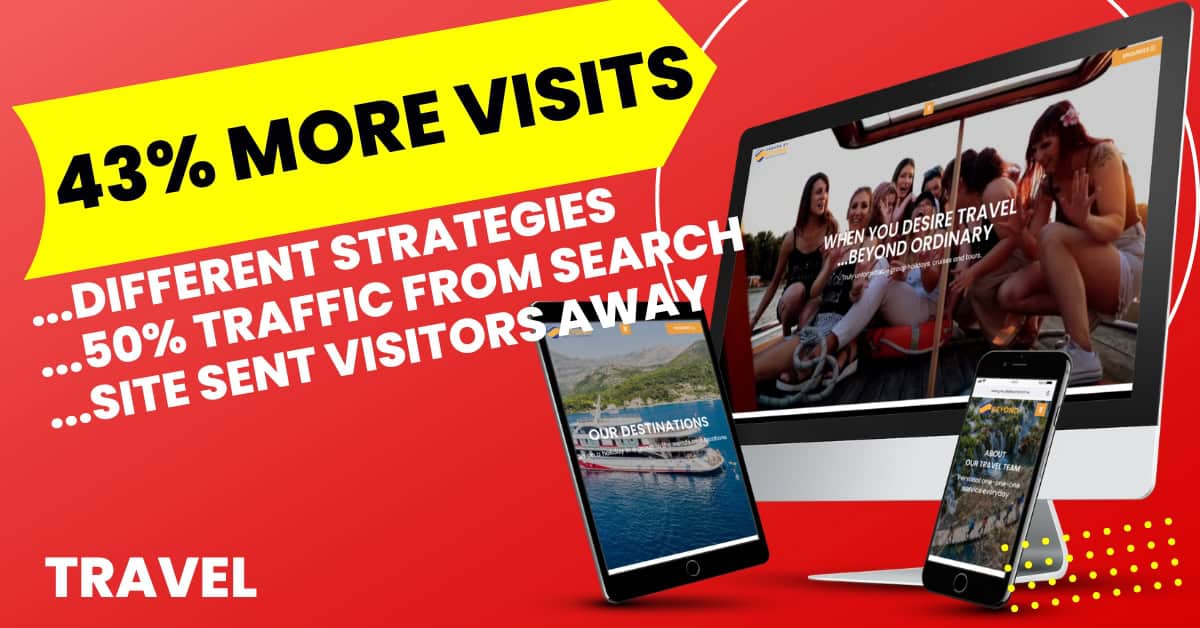
- Visitors grew 43% year on year, 4,058 in 2025 up from 2,834, but average engagement time fell from 55 seconds to under 30
- Organic search made up roughly half of all page views over three years, despite constantly shifting direction
- 511 contact page visits and 55 enquiry form leads recorded to the end of 2025
- Direct written advice against a specific content approach was given, and not followed
- The business eventually solved its content problem by sending visitors to a third-party platform instead of its own site, permanently capping its own search visibility in the process
I have dealt with a lot of web developers and designers over many decades and I must say Paul is the best I have ever used.
Quick, proactive, business smart and creative. Plus great value for money. We will be using him again.
Thank you Paul you make me look good!

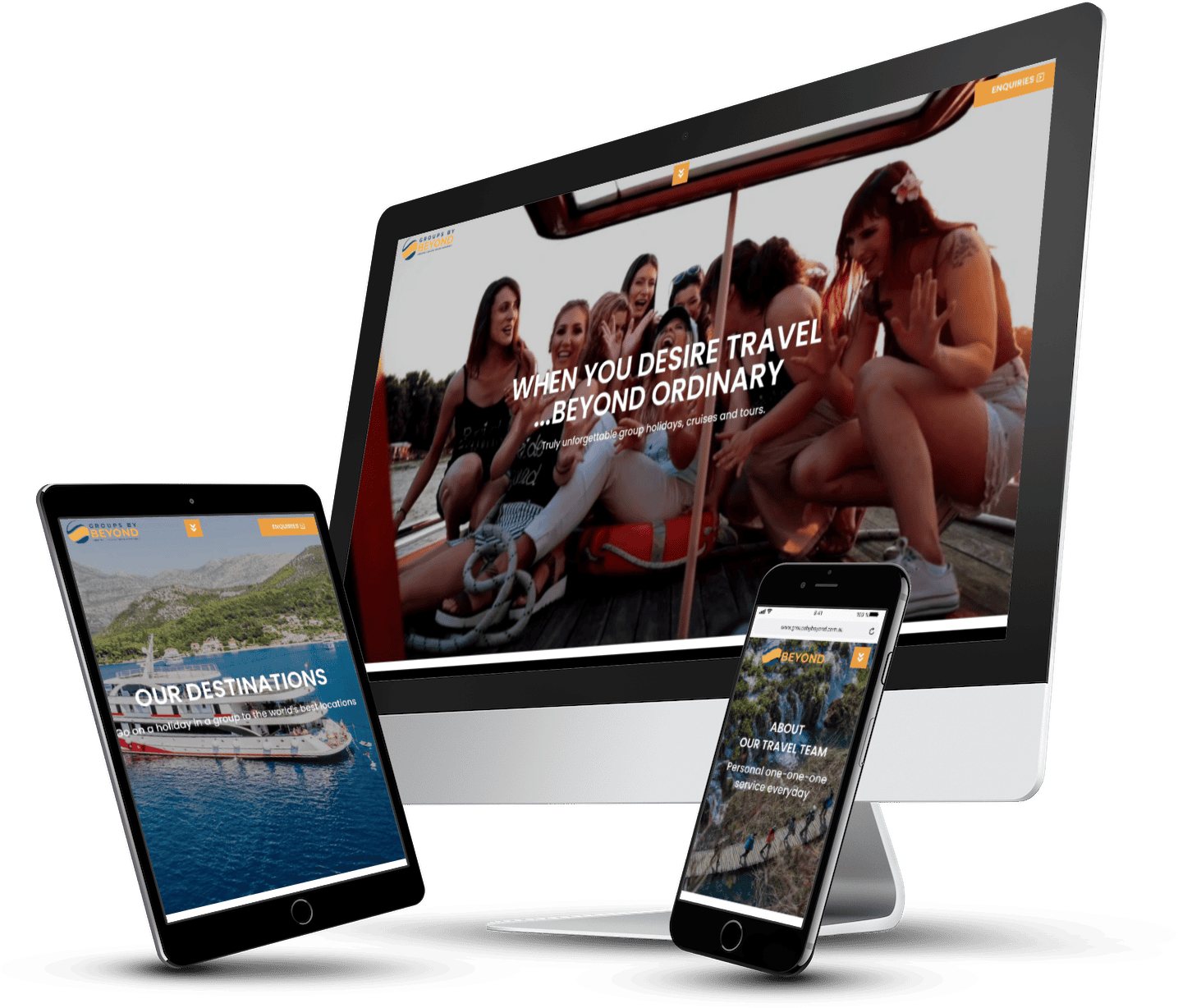
I built a new website for Groups By Beyond, a division of Beyond Travel dedicated to organising group travel for 10 or more people, in September 2022. Over the following three years, the business tried different go to market content strategies. None of them were finished with any real depth before direction changed again. A very common situation for start up businesses where revenue and other external pressure forces decisions to be made that require quick results.
The site had two audiences from day one
Groups By Beyond needed to speak to two genuinely different people: travel agents who might sell the service to their own clients and individuals or groups planning a trip themselves. That’s a real, reasonable brief. It’s also a harder one to execute well than a single-audience site, since neither audience can be served properly with content built for the other.
The five strategies, in order
- September 2022: new website built.
- June 2023: three months of approved SEO development, expanding into specific group tour niches, gay travel, weddings, yoga retreats and similar. Executed with generic copy and stock photography rather than original information from travellers, first-hand images or authentic detail or pricing.
- February 2024: a monthly SEO retainer began, scoped narrowly to include two new blog posts a month but with content created generically rather than from travellers, staff in the tour destinations or from content creators at the sites being promoted.
- April 2024: new service pages added for MICE (meetings, incentives, conferences and exhibitions) travel agent services, school tours which were all fairly generic pages with no original content on them. They acted like an online business card but without much depth to get found with organic search.
- June 2024: a push to add individual destination and tour pages for Iceland, against my direct advice. The brief was to replicate content from another website within the same business to build out pages for one selected destination to create focus, not the full range the business actually served, with nothing unique, no original detail, not even pricing included. This activity ran for three months, then stopped.
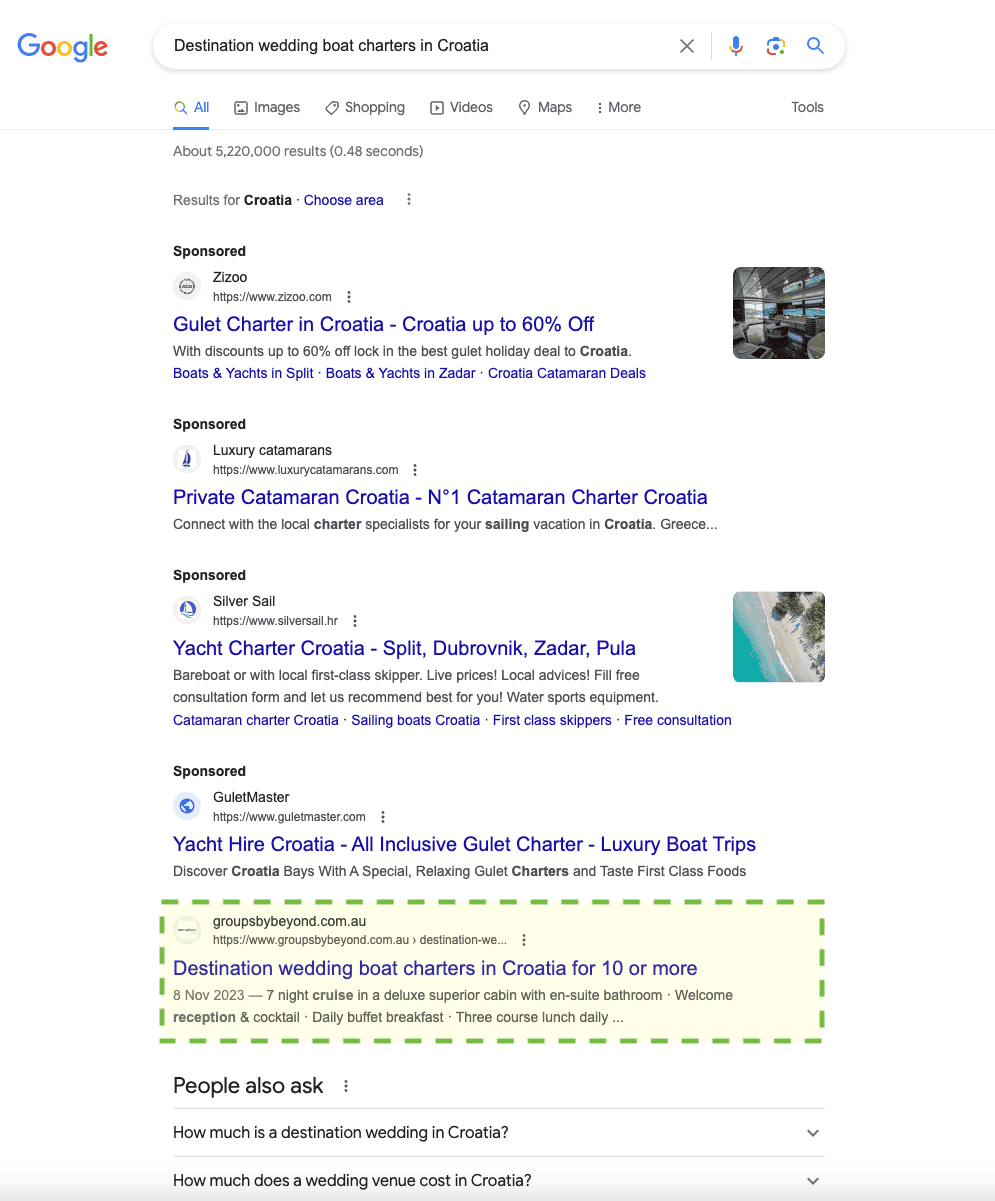
- October 2024: a last activity to add cruise ship pages for Croatia, leading with price per person to try to convert browsers into buyers with information showing them how affordable chartering a cruise ship actually was. Nothing further was added after that, and the engagement ended.
Why ranking any of this was always going to be hard
Look at what those five strategies actually asked one site to do, and the scale of the problem becomes obvious.
- Niche group travel, gay travel, weddings, yoga retreats, is its own competitive category, up against small, dedicated operators and publishers who talk about nothing else, day in and day out.
- MICE travel is an entirely different audience again, corporate travel bookers and event planners, searching in language that has almost nothing in common with someone planning a yoga retreat.
- Iceland tour content competes globally against everything from major booking platforms to Iceland’s own tourism board to travel bloggers who’ve spent years building authority on that one destination specifically.
- Croatia cruise pricing sits in yet another category again, competing directly with the cruise lines’ own websites and the booking aggregators built specifically around cruise search.
Each of those is a genuinely separate fight, requiring its own depth of content to have any real chance of ranking organically. Building enough authority to compete seriously in even one of them takes sustained, focused effort over time. This site was being asked to compete in four or five of them at once, none ever taken past a first, thin attempt before a different direction was requested.
When you delve deeply into each of the content pillars this site needed to serve, you begin to realise it had to perform across very disparate search queries against a very wide range of competitors, many of whom were dedicated to a single service or destination.
That’s before any consideration is given to all the online travel booking websites, travel blogs and destination resources already occupying most of the available search results for these exact terms. A site trying to be everything, across five different directions, against specialists who only had to be good at one thing each, was never going to out-rank any of them without a level of sustained content investment far beyond what this site actually received or the budget or time available.
The advice that wasn't followed
Before the Iceland work began, I put this in writing directly:
“I understand you want leads, but unfortunately with this approach it could take 12 months or more before that happens based on the time it takes to grow organic search volumes, that is assuming the site can out rank existing travel sites, travel booking listing sites, blogs etc that have thousands of content pieces on the topic… Even harder for a brand new domain. Replicating existing content that is practically the same as what is already available won’t work, you need that plus loads of original content.”
The work went ahead as originally planned anyway and the results proved the position I took.
What actually made it onto the site
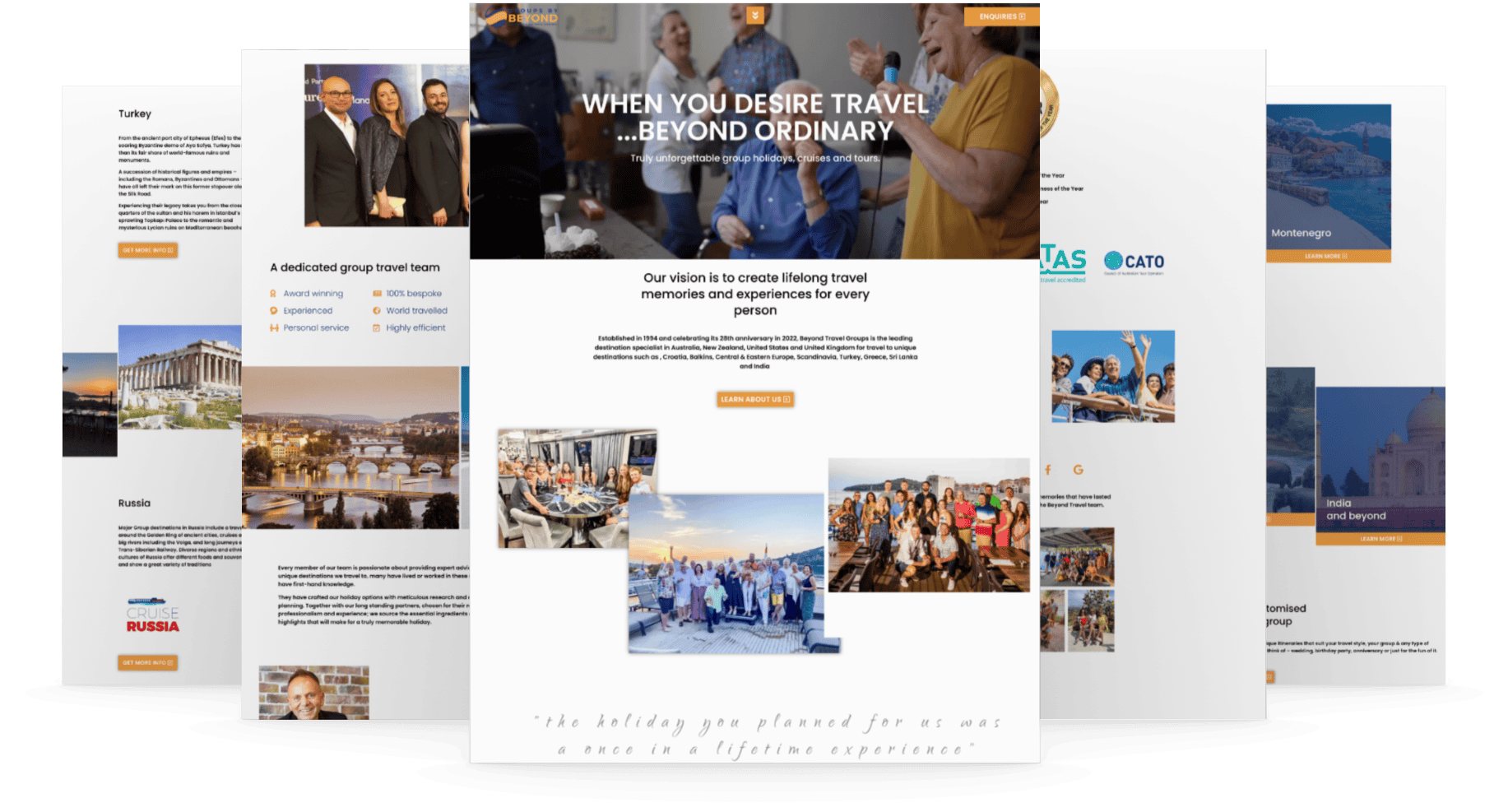
Some of it was genuinely good: real reviews, and real photos from actual travel groups. Although the majority of the site’s content was either generic industry copy or, in several places, directly duplicated from the parent business’s own website, Beyond Travel, or Ai generated copy, rather than very detailed, specific, high authority content that was truly unique.
The blog posts, ordinary as they were, ended up being the most genuinely original content type on the site, and it showed in the numbers. They did attempt to answer some of the common questions people were asking online or trying to figure out.
The real data, September 2022 to December 2025
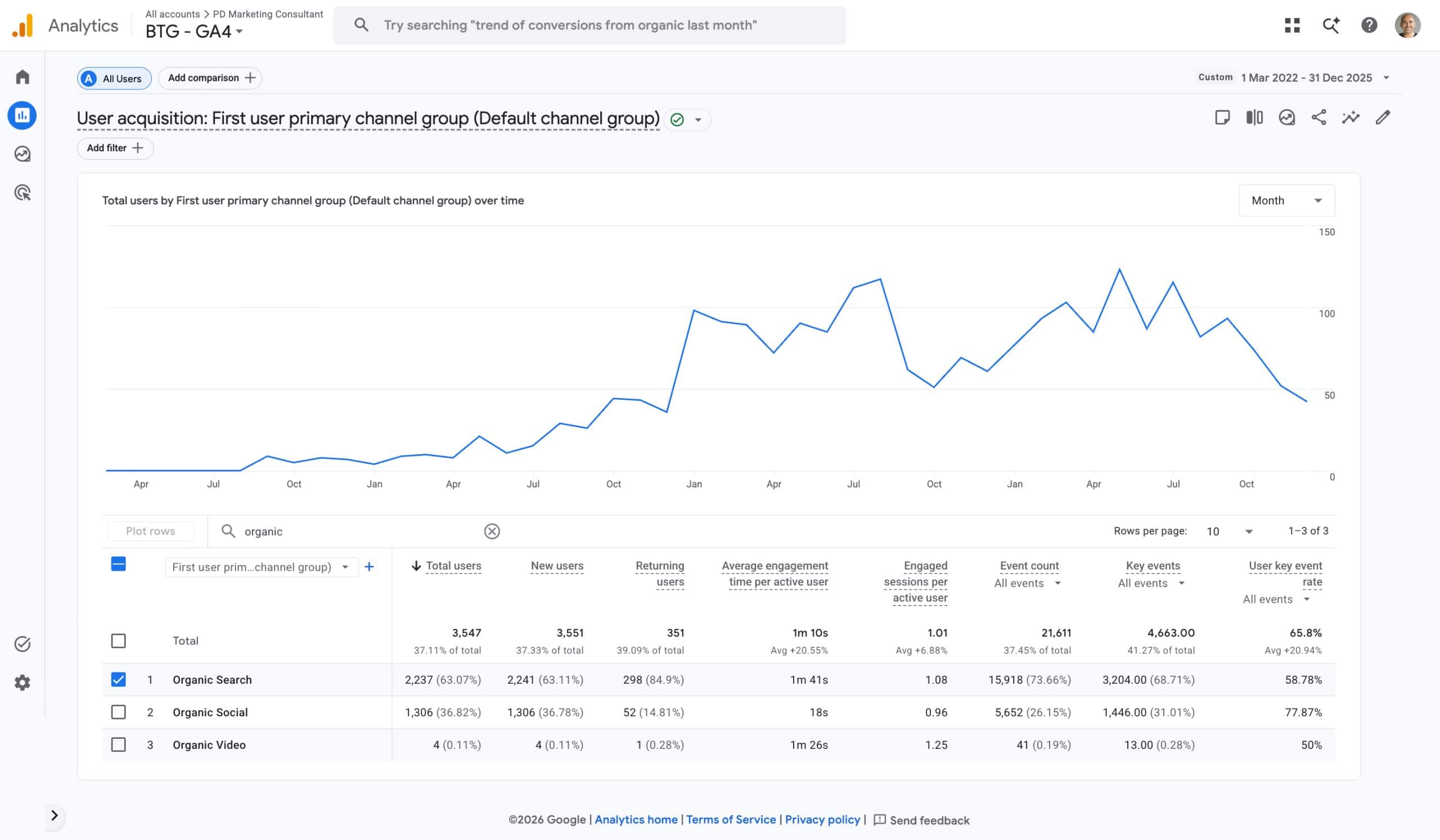
Across that full window, organic search delivered 9,321 page views out of 19,190 total, roughly half of everything the site earned, across every strategy change and every unfinished direction. Blog and advice-style content earned 893 of those organic views. The specific tour pages, the ones built around replicated or generic destination content, earned just 307.
2025 against 2024 tells a more complicated story.
Visitors grew 43%, from 2,834 to 4,058, genuinely positive on the surface. Average engagement time fell at the same time, from 55 seconds to under 30, a real sign that more people were arriving without finding much reason to stay.
“Direct” traffic made up 67% of 2025’s total, 56% of that from Australia and the rest from overseas, with no way to confirm whether that reflected paid advertising or something else but I suspect it was from ads.
Organic search grew only 3% over the same period, but organic visitors were consistently the most engaged, averaging around a minute per visit, further evidence that the channel bringing in the least volume was bringing in the most genuinely interested people.
511 people visited the contact page, and 55 leads came through the enquiry form, across the full period to the end of 2025.
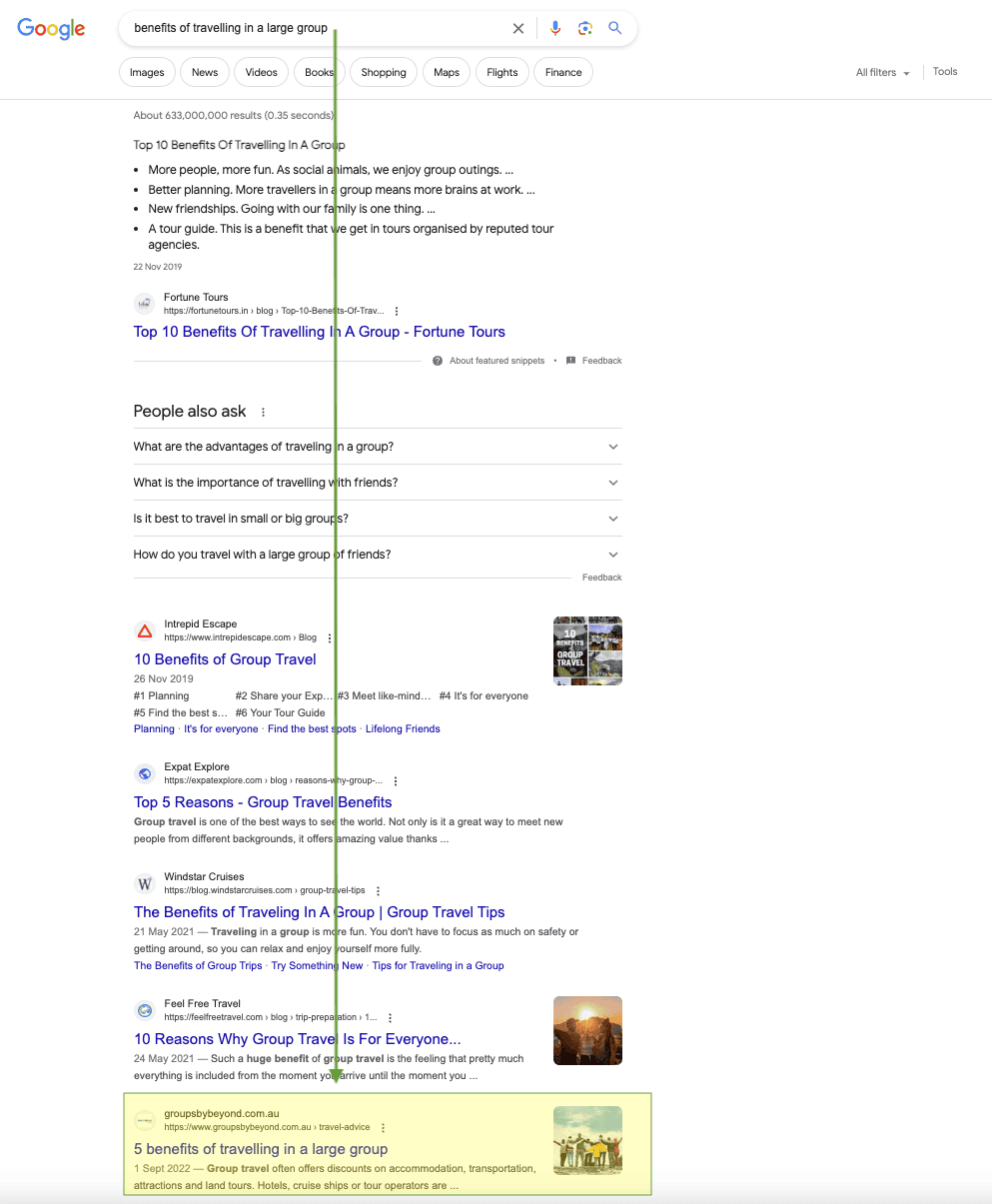
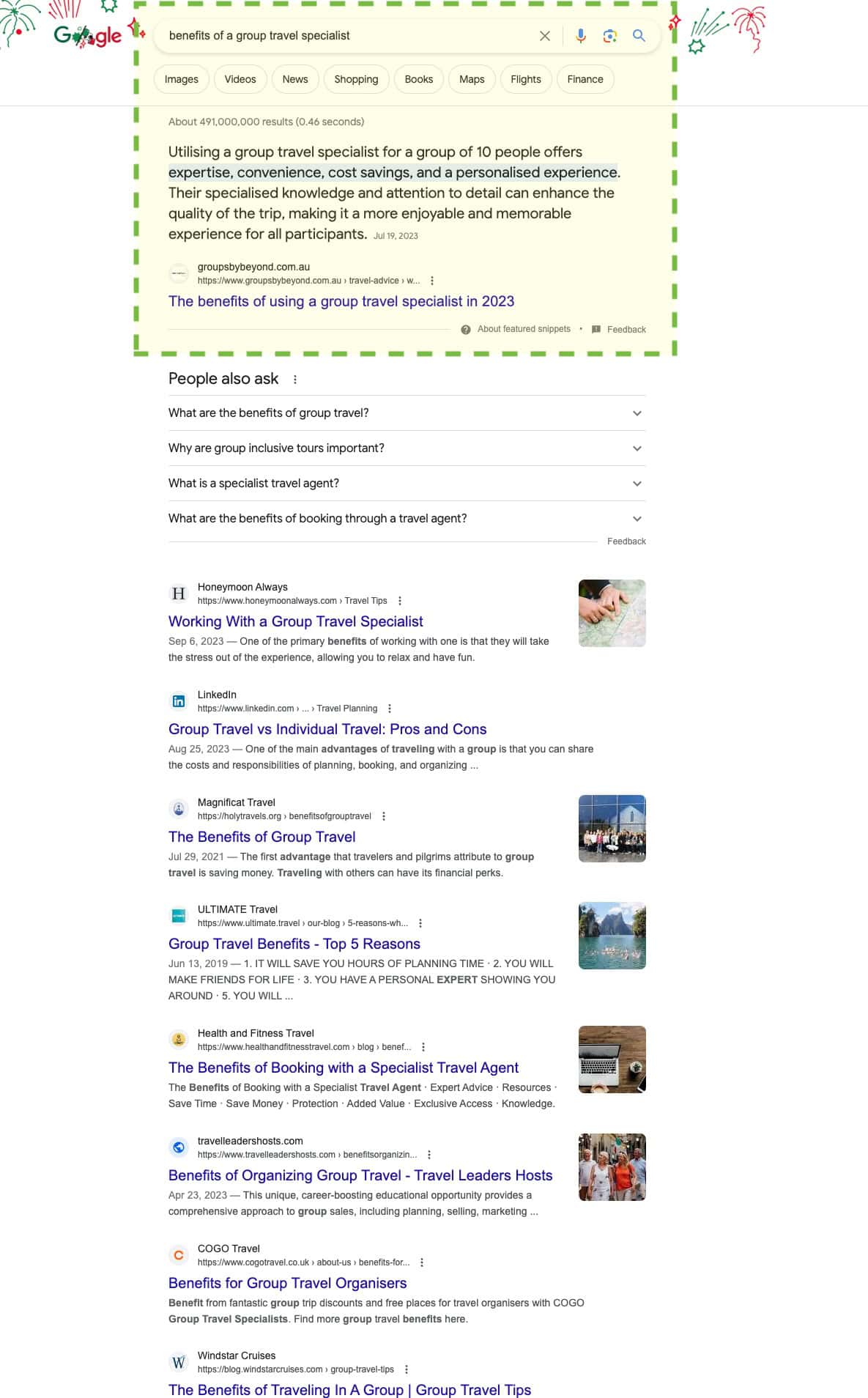
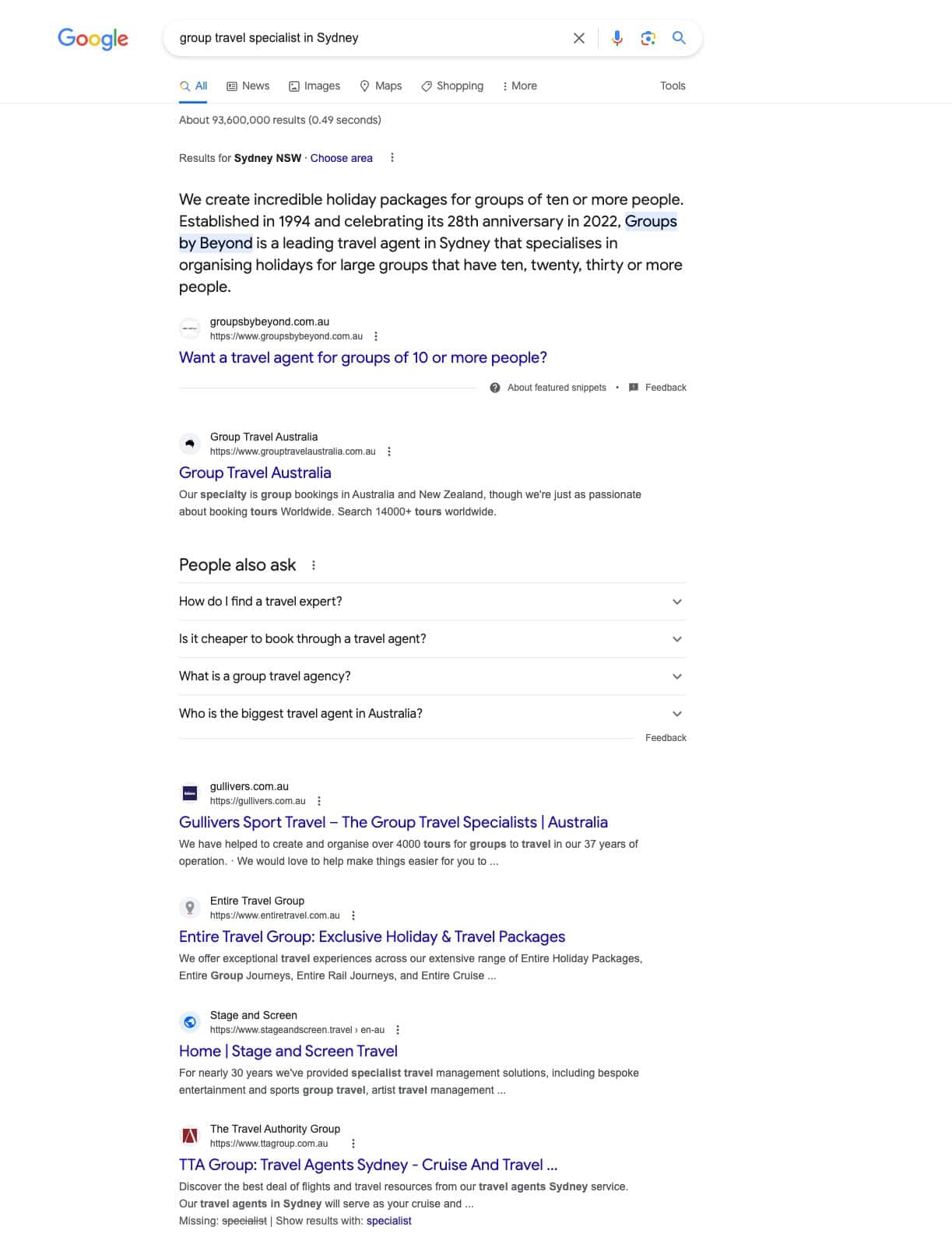
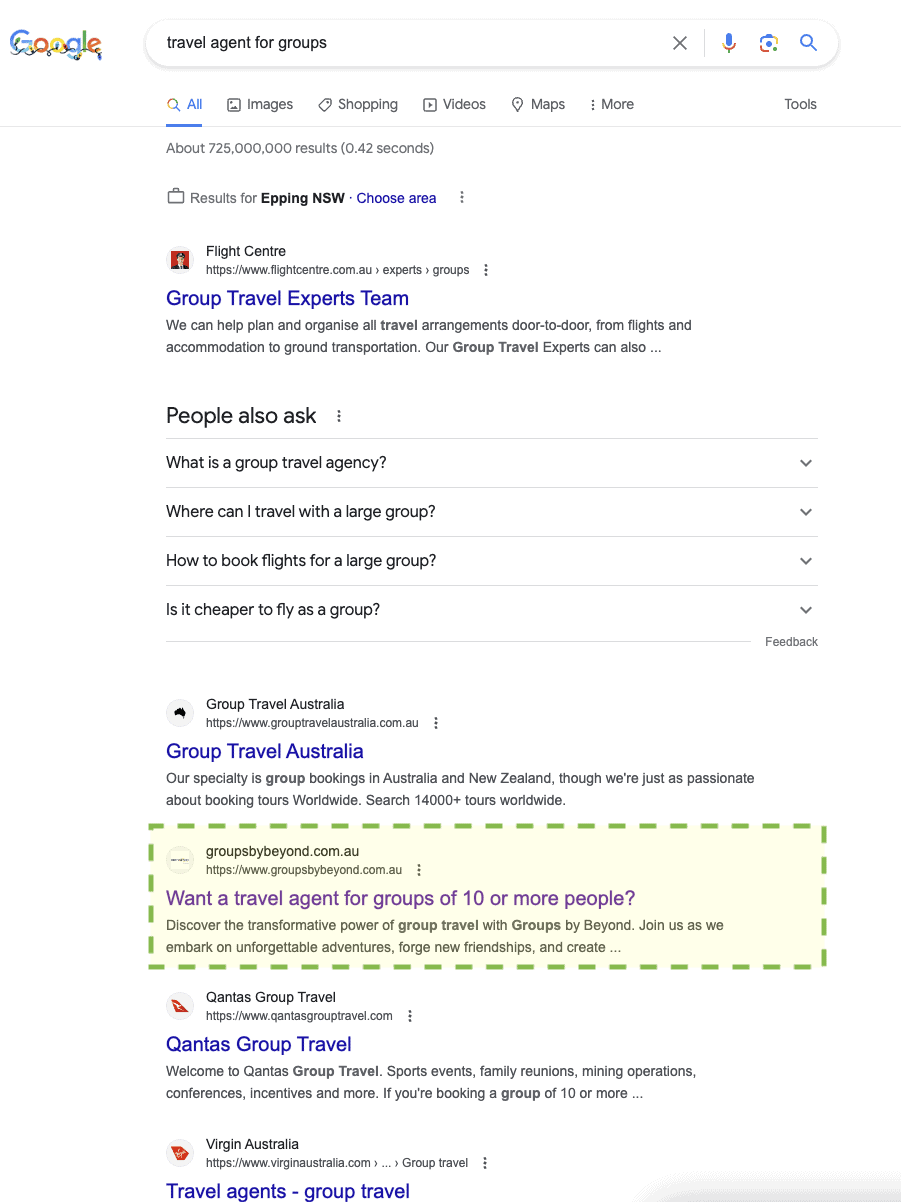
The brand did show up on a number of 1st page search queries and even featured snippets so there were some encouraging signs.
The last few steps and how it hinders results
After the engagement ended, the business’s next step was to link out to Travify, a third-party platform, so a visitor wanting to see a specific itinerary or product information would click through and read it there instead of on the Groups By Beyond site itself.
That’s a genuinely reasonable operational decision on its own terms, itineraries are easy to build and maintain in a purpose-built tool like Travify. Although it also means none of that content lives on the business’s own domain anymore, which permanently caps any future improvement in organic search visibility.
I’ve made this same point elsewhere about the risk of building a business on infrastructure you don’t own: content sitting on someone else’s platform can’t compound your own search visibility, no matter how good it is. From here, growth depends on paid advertising, referrals or word of mouth, not a channel that keeps working after the spending stops.
It could have been possible to build pages out with the same information as displayed on Travify, but displayed on their website, but there wasn’t the time or budget available to pay for that, so pragmatically taking the path of using an external provider made sense.
Why this happened, and why it's a genuinely normal situation
This is really a story about a start-up division of a larger business that never had the budget for consistent, distinct content investment across two audiences and many different niches over a long enough period to let any of them compound or be ‘owned’.
That’s not a criticism. It’s the situation a lot of growing businesses get forced into, because the pressure to generate sales now is real, and content built for organic search takes months to prove itself, exactly the timeline flagged directly before the Iceland work went ahead anyway.
The same underlying pattern shows up across several other case studies on this site: good advice, genuinely understood, that doesn’t get the sustained follow-through needed to actually work. Business owners simply don’t execute everything suggested due to time, budget or other constraints.
If you’re weighing up a short-term fix against a slower approach that would actually compound, get in touch and I’ll help you think through which one your business can actually commit to. I’ll tell a client directly when an approach won’t work, in writing, before the work starts, not after. If you’re not sure whether your current content strategy has actually been given a real chance to work, see how I could help.